
Once the old covering and felt have come off a roof in Warmley, the timbers underneath are exposed properly for the first time in years, and this is genuinely one of the most useful moments in the whole re-roofing process. Rafters, purlins and battens that have been hidden beneath tiles and insulation can finally be inspected directly, rather than guessed at from below through a loft hatch.
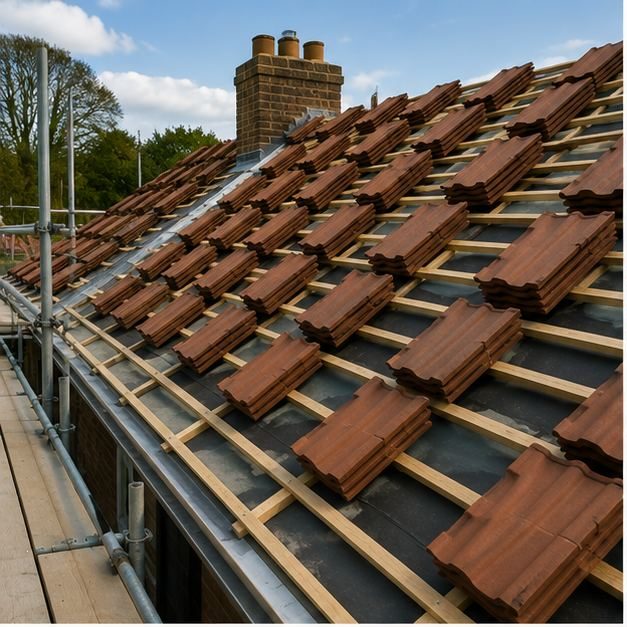
What a roofer is looking for at this stage varies a little depending on the age and construction of the property. In some of Warmley's older cottages, timbers may be smaller in section than modern building standards would specify, or show signs of historic repairs that need reassessing. In the area's later twentieth-century estate housing, timbers are usually more standardised, but can still suffer from damp staining, mild sagging, or localised decay around areas where a roof has leaked over time. A methodical check moves across the whole roof void rather than a quick glance from the hatch, since problems are not always where they are expected and a section that looks sound at first glance can still hide decay once probed properly.
Common issues found during this stage include wet rot around valleys or chimney junctions where water has been getting in gradually, woodworm damage that has weakened sections of timber without being visible from inside the loft, and battens that have simply reached the end of their useful life and need replacing regardless of the roof covering above them. Catching these problems now, while the roof structure is fully accessible, is far more straightforward than trying to address them later.
Any significant findings should be discussed with the homeowner before work continues, along with a clear explanation of what needs doing and why, rather than simply proceeding without comment. Photographs taken at this stage are also useful, since they give homeowners a genuine look at a part of their property they would otherwise never see.
When timber replacement is needed, it is generally more cost-effective to deal with it while the roof is already stripped back than to leave it and risk the same section failing again in a few years. Splicing in a new length of rafter or renewing a run of battens is straightforward work for an experienced roofer once access is already in place, and doing it now avoids the far more disruptive prospect of having to open the roof back up specifically to fix it later.
Brunel Roofing Bristol carries out this kind of timber check as standard on every re-roof in Warmley, flagging anything of concern honestly before proceeding. Anyone worried about the age or condition of their roof structure can ask about this process when requesting a quote.
Get a Free Quote for New Roof Installations in Warmley
Every roof is different — the fastest way to get an accurate answer is a quick chat with our team.