
Purlins and rafters together form the skeleton of a pitched roof, and checking their condition properly is a standard part of any professional new roof installation rather than an optional extra tacked on at the end. Around Ridgeway, where a good number of homes are semis and terraces built several decades ago, this check tends to reveal a wide range of conditions, from timber that has stood up remarkably well against decades of British weather and changing seasons, to sections that clearly need attention before work can sensibly continue.
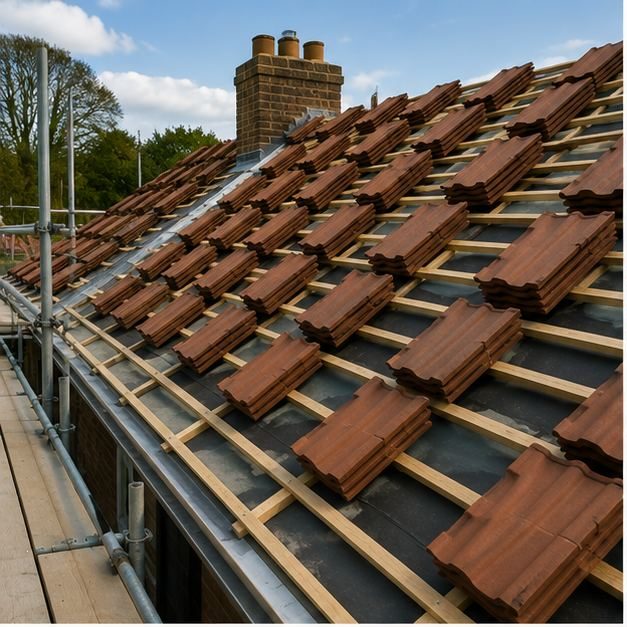
Rafters run from the ridge down to the wall plate and carry the roof covering's weight along their length, transferring it steadily down into the walls below, while purlins run horizontally across the roof to support the rafters over longer spans and reduce the chance of them bowing or twisting under sustained load. A roofer checking these elements is looking for splitting along the grain, twisting that has developed gradually over time, soft or spongy timber caused by past damp getting in unnoticed, and any sign that a purlin has slipped even slightly from its original bearing point on the wall.
This inspection typically happens once the old tiles, battens and underlay have been stripped away completely, since that is the point at which the timbers become properly visible and genuinely accessible, rather than partially hidden behind insulation or boarding. Probing suspect areas with a small tool to check for softness, testing for flex under gentle hand pressure, and looking closely at joints and bearing points all help build an accurate and honest picture of what condition the structure is really in before any new materials are introduced. It is a methodical process rather than a quick glance, and taking the time to do it properly pays off later in how the finished roof performs.
Where everything checks out, the new roof can proceed straight onto the existing structure with fresh battens and a new covering laid confidently on top. Where a purlin or rafter needs attention, the repair is carried out at this stage, before any new materials go on top of it, so the finished roof in Ridgeway is supported by a structure that has actually been verified through proper inspection, rather than simply assumed to be sound because nothing looked obviously wrong from below the ceiling. This step-by-step approach also gives homeowners confidence that the price they are quoted reflects the true condition of their roof, not a rough guess made from ground level.
Brunel Roofing Bristol builds this kind of structural check into every re-roofing project we carry out, because it is one of the details that genuinely separates a roof that lasts from one that causes problems a few years down the line. If you would like your roof assessed properly, please get in touch for a quote and an honest structural opinion on your home.
Get a Free Quote for New Roof Installations in Ridgeway
Every roof is different — the fastest way to get an accurate answer is a quick chat with our team.