
Old Market's roofline is a patchwork of different periods, with Georgian and Victorian terraces standing close to former commercial buildings and newer flat conversions. That variety makes choosing a replacement roof tile more than a simple matter of picking whatever is available; it means finding a covering that looks like it genuinely belongs on a particular building, in a particular street, within a quarter that is visibly being reinvested in and regenerated street by street, where new work sits permanently alongside much older neighbours.
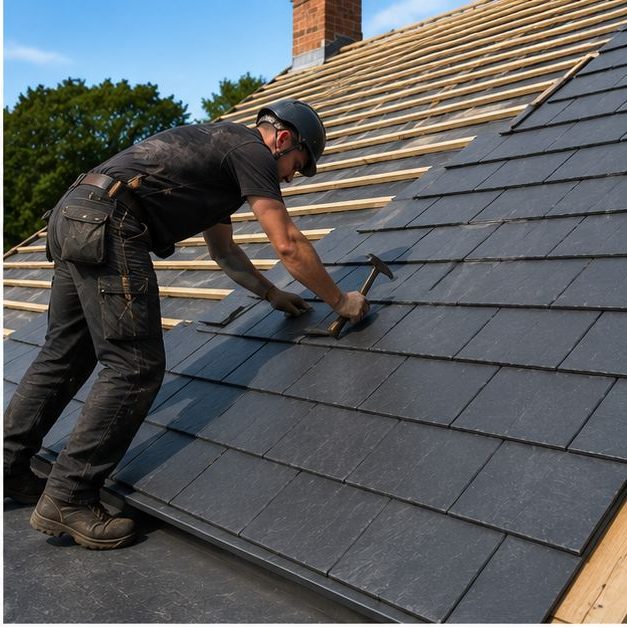
Traditional clay plain tiles remain a strong option for many of Old Market's older houses, offering a small, textured unit that reads correctly on a period roof and weathers to an attractive, uneven finish over time as individual tiles pick up subtle differences in tone. Concrete interlocking tiles, by contrast, cover more roof area per unit and can be considerably more cost-effective to install, and modern ranges now include profiles and colourways designed specifically to echo the appearance of older clay or slate coverings without the higher price tag that natural materials usually carry.
Colour is just as important as shape when it comes to fitting in. A tile that is too uniform, too dark or too glossy can sit oddly against a row of weathered, naturally varied roofs, particularly where neighbouring properties still carry their original coverings and have done for well over a century. We generally recommend viewing physical tile samples on site, in the actual light the roof will sit in, rather than relying on a catalogue image or a small sample chip, since colour can shift noticeably once a full roof area is laid.
It's also worth thinking about how a tile choice will read from street level once the roof is finished, since much of Old Market is walked and driven past constantly on the way in and out of the city centre. A covering that looks convincing close up but reads as flat or artificial from a distance can undermine the overall effect, even if the individual tiles are well made and correctly fitted by an experienced installer.
Texture and profile depth matter too. Deeply grooved or heavily shadowed tile profiles catch the light differently to flatter, smoother units, and this difference becomes more obvious under the low, angled light typical of Bristol's autumn and winter months, so it pays to consider the roof's appearance across the whole year rather than judging it on a single bright afternoon.
If you're weighing up tile options for a property in Old Market, Brunel Roofing Bristol can bring samples to the property and talk through which traditional-looking tiles will suit the building, the street and your budget.
Get a Free Quote for New Roof Installations in Old Market
Every roof is different — the fastest way to get an accurate answer is a quick chat with our team.