
St Pauls has one of Bristol's richest concentrations of historic terraces and period townhouses close to the city centre, and with that history comes decades, sometimes well over a century, of leadwork that has been repaired, replaced in part, or occasionally patched with materials that were never designed for the job in the first place. Inspecting these older roofs turns up a fairly consistent set of problems time and again.
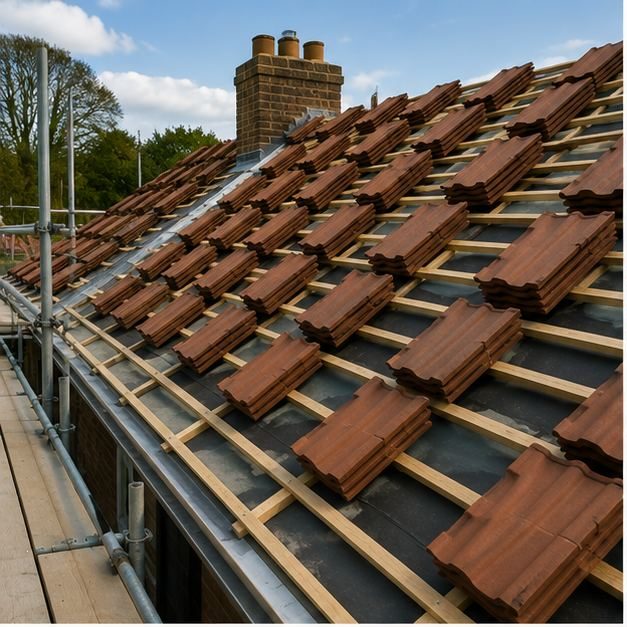
Undersized or missing soakers are one of the most frequent issues, particularly around chimneys where a previous repair may have relied on a single strip of flashing pushed under the tiles rather than individual soakers woven between each course as good practice requires. This can look adequate for years before a spell of driving rain finds the gap and water begins tracking into the roof timbers. Missing or badly formed back gutters behind chimney stacks are another common culprit, often the result of a repair that focused on the visible front apron while neglecting the hidden gutter behind, out of sight and out of mind.
We also regularly find mortar-bedded flashing where the pointing has failed entirely. Older step flashing and chimney flashing was often set into mortar joints that were never revisited during later repointing work on the wall or stack, so the joint crumbles away and leaves the lead loose or lifted, even though the lead itself may still be perfectly serviceable underneath. Non-lead patch repairs, such as bituminous flashing strip applied over a failed lead joint, are another sign of a roof that has been kept going with short-term fixes rather than a proper renewal at the source of the problem.
Botched historic repairs are perhaps the trickiest to deal with, since previous work is not always visible until the old covering is stripped back layer by layer. It is not unusual to find several generations of flashing layered on top of one another around a single chimney on a St Pauls property, each addition covering rather than correcting the fault left by the last, going back many years.
We also occasionally find leadwork that was correctly specified originally but has simply outlived its practical service life, having done its job faithfully for fifty years or more before finally succumbing to fatigue. This is not a sign of poor original workmanship so much as a reminder that even good lead does not last forever, and that a property's age should factor into how soon a full renewal is worth considering.
A full re-roof gives Brunel Roofing Bristol the opportunity to strip all of this back and start with a clean, properly detailed leadwork installation rather than building on top of a history of patchwork fixes that were never intended to be permanent. If your St Pauls property has had several leak repairs over the years, it is worth having the leadwork looked at properly rather than assuming another patch will solve the underlying issue for good.
Get a Free Quote for New Roof Installations in St Pauls
Every roof is different — the fastest way to get an accurate answer is a quick chat with our team.