
Clay roof tiles have a long track record on traditional properties, and a number of the older houses around Bromley Heath still carry their original coverings decades after they were first laid. Under normal conditions, a well-made clay tile can comfortably last 60 to 100 years, and it isn't unusual for individual tiles to outlive several rounds of general roof maintenance around them. That longevity is part of why clay remains a popular choice when homeowners in this part of north-east Bristol want to keep a traditional appearance while replacing a roof that has genuinely reached the end of its life, rather than switching to a less characterful modern alternative purely for convenience.
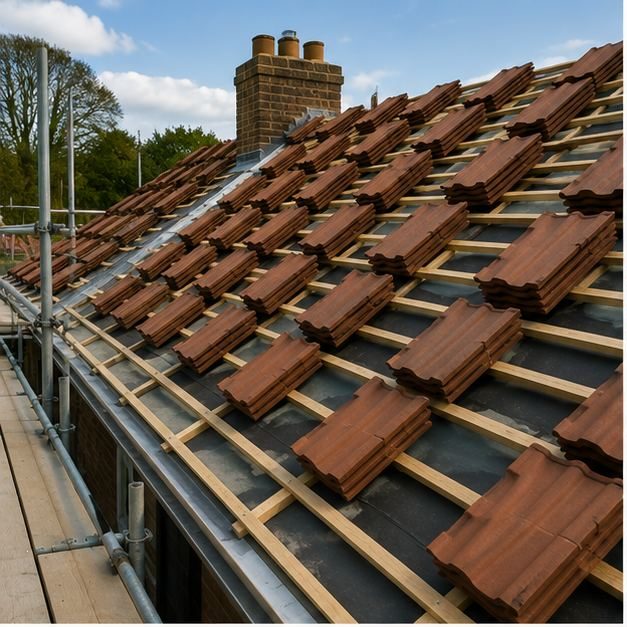
How long the tiles actually last on a given property depends on more than just the material itself. The quality of the original firing matters a great deal, since a poorly fired tile is more porous and far more susceptible to frost damage than one made to a higher standard. Exposure also plays a role: a roof slope that catches the worst of the prevailing wind and rain will generally show wear sooner than a more sheltered elevation on the same house, which is why it's common to see uneven ageing across different parts of the same roof in Bromley Heath. Roofs shaded by nearby trees can also age differently again, since damp organic debris left sitting on tiles for long periods speeds up the same porosity problems that exposure alone would cause more slowly.
The clearest sign that clay tiles are approaching the end of their working life isn't fading colour, which is largely cosmetic, but physical deterioration. Hairline cracks that widen over successive winters, tiles that feel unusually light or crumbly to the touch, and a general increase in moss or algae holding moisture against the surface are all indications that the material has become porous and is letting water through rather than shedding it. Individual damaged tiles can often be swapped out as a repair, but once this kind of deterioration is widespread across the roof, patching one area at a time stops being a sensible long-term approach, and can end up costing more over a few years than addressing the roof properly in one go.
For homeowners trying to judge where their own roof sits on that timeline, an honest inspection makes far more difference than guessing based on the property's age alone, since two similarly aged roofs in Bromley Heath can be in very different condition depending on how they were originally installed and maintained. Batten condition and the state of the underlying membrane also affect the real-world lifespan of a clay tiled roof, since even sound tiles won't keep a house watertight if what's holding and backing them has already failed. Brunel Roofing Bristol can assess whether your existing clay tiles still have useful life left in them or whether the roof has reached the point where a full re-roof, potentially in a matching clay profile, makes more sense than continued repair.
If you're unsure whether your roof's clay tiles are simply weathered or genuinely failing, it's worth getting a proper opinion before committing to further patch repairs. Get in touch with Brunel Roofing Bristol for an inspection and a clear, honest recommendation on the best way forward.
Get a Free Quote for New Roof Installations in Bromley Heath
Every roof is different — the fastest way to get an accurate answer is a quick chat with our team.