
When homeowners in Longwell Green ask why a quote for their roof seems to need more tiles than the roof area alone would suggest, the answer usually comes down to shape. A simple rectangular roof with a plain ridge and two gable ends wastes very little material, because almost every tile can be used whole. A roof with hips, valleys, dormers and multiple junctions is a different story, because every one of those features requires tiles to be cut to fit, and cut tiles cannot simply be reused elsewhere on the roof.
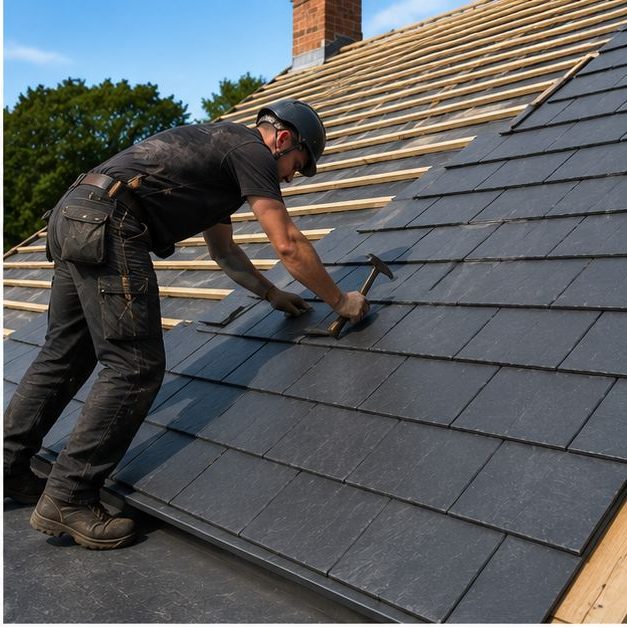
Hip ends are one of the more obvious sources of waste, since tiles along the sloping edge need to be angled to follow the hip line, and the offcuts from those cuts are rarely large enough to use anywhere else. Valleys work the same way from both directions, with tiles from each adjoining slope cut back to the valley line, again producing offcuts that go straight into the skip rather than back onto the roof. On a property with several hips and valleys, as is common on the more architecturally varied homes around Longwell Green, this cutting can account for a noticeable proportion of the total material ordered.
Dormers and other roof breaks add further waste around their cheeks and junctions, where tiles have to be trimmed to follow an irregular line rather than a straight run. Even small architectural details, such as a decorative gable or a section of roof with an unusual pitch, tend to generate more cut tiles proportionally than a large open area of roof would, simply because there is less continuous space to lay whole tiles across.
A reasonable allowance for waste is a normal and expected part of ordering material for any re-roof, but on a complex roof that allowance needs to be calculated properly rather than applied as a flat percentage that might suit a simpler building. Under-ordering on a complicated Longwell Green roof can lead to delays waiting for a further batch of tiles, sometimes from a different production run with a slightly different shade, which is not an ideal outcome partway through a job.
There is also an environmental angle worth mentioning, since offcuts and broken tiles still need to be removed and disposed of responsibly, and a roof that generates more waste material simply produces more to skip and haul away. Where possible, sound whole tiles that are surplus to requirements can sometimes be kept by the homeowner as spares for future minor repairs, which is a sensible use of material that would otherwise sit unused, particularly on a roof shape complex enough that an exact colour and profile match may be harder to source again in years to come.
A contractor who is used to pricing complex roof shapes will factor this into the quantities from the outset, so there are no unpleasant surprises midway through the project. Brunel Roofing Bristol calculates material requirements carefully for roofs of all shapes, taking hips, valleys and other features into account before ordering, so your Longwell Green re-roof can proceed without unnecessary delays caused by material shortfalls.
Get a Free Quote for New Roof Installations in Longwell Green
Every roof is different — the fastest way to get an accurate answer is a quick chat with our team.