
Bradley Stoke sits in a fairly open part of South Gloucestershire, and many streets are exposed to a good deal of prevailing wind, particularly on properties positioned near open ground, business parks or at the edges of newer estate developments where there is little in the way of surrounding shelter. Older roofing methods relied heavily on the weight of the tile and a small number of nails or clips to keep everything in place, which was often adequate at the time but can leave a roof vulnerable as fixings age, corrode and gradually loosen over the years of exposure to the elements.
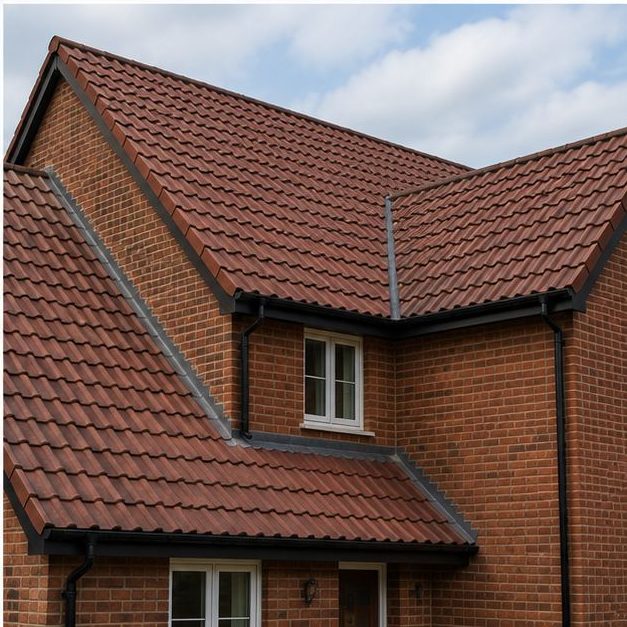
Modern tile fixing specifications take wind exposure far more seriously than they did a few decades ago. Current guidance sets out how many clips or nails should be used per tile depending on the roof's height, pitch, location and exposure category, meaning a roof installed today in Bradley Stoke is fixed to a standard calculated specifically for local wind conditions rather than a generic assumption applied everywhere regardless of setting. This calculation takes into account how tall the building is, how sheltered or exposed the plot is, and which direction the prevailing weather typically comes from, producing a fixing pattern tailored to that individual property.
Ridge and hip tiles benefit particularly from these updated methods, with mechanical fixing systems now commonly used in place of, or alongside, traditional mortar bedding. This reduces the risk of ridge tiles being lifted in strong gusts, which was historically one of the more common causes of storm damage on roofs across the wider Bristol area, often resulting in emergency repairs during the worst of the winter weather. Verge tiles and the outermost rows of the main roof field are also given particular attention, since these edges experience the greatest uplift forces during high winds and are the areas most likely to fail first on an older, under-specified roof.
For homeowners replacing a roof, it is worth asking directly what fixing specification will be used and why, rather than assuming all installers work to the same standard, since cutting corners here is not always visible once the tiles are laid and the scaffolding has come down. It can also help to ask how the fixing pattern would differ between a sheltered plot and a more exposed one nearby, since a clear answer is usually a good indicator that the calculation has genuinely been done rather than simply assumed. Brunel Roofing Bristol calculates the correct fixing pattern for each Bradley Stoke property individually, taking into account its height and position, so that the finished roof is properly secured against the wind loads it will actually face rather than a generic minimum specification applied without much thought.
Underlay choice plays a supporting role here too, since a robust, breathable membrane fitted beneath the tiles adds a further layer of protection even if wind ever does find its way past the outer covering during an especially severe storm. Combined with correctly specified fixings, this layered approach gives Bradley Stoke homeowners much greater confidence that their roof will stand up to whatever the local weather brings over the years ahead.
A roof that is well fixed from the outset causes far fewer problems down the line, particularly during the winter months when storms are more frequent and more severe. If you would like to know more about how your roof would be specified and fixed, Brunel Roofing Bristol is happy to talk through the details as part of a free, no-obligation quote.
Get a Free Quote for New Roof Installations in Bradley Stoke
Every roof is different — the fastest way to get an accurate answer is a quick chat with our team.