
Natural slate has long been associated with the grand terraces and villas found throughout Clifton, and for good reason. Its fine grain, subtle colour variation and slim profile give roofs a refined, understated appearance that suits the area's Georgian and Victorian architecture far better than heavier, more uniform manufactured materials. When a natural slate roof reaches the end of its life, replacing it in kind is usually the best way to keep a property looking exactly as it should, both up close and from a distance.
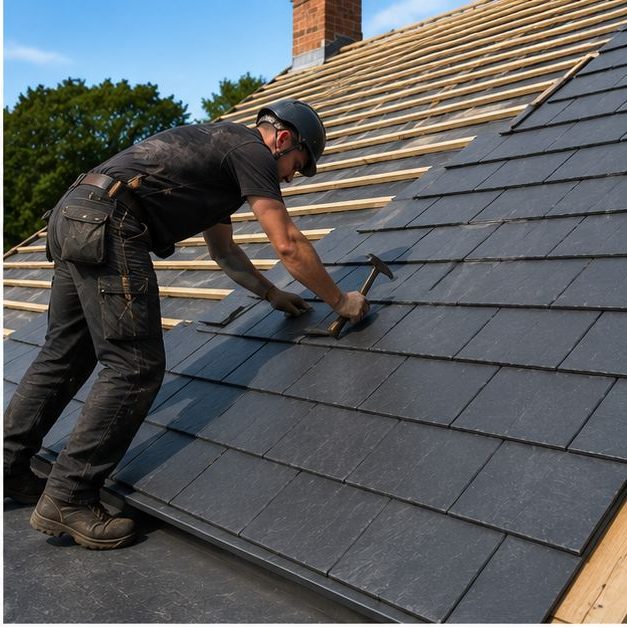
Part of what makes natural slate so effective at preserving character is the way it ages over the years. Unlike some manufactured alternatives that can look flat, glossy or overly consistent across the whole roof, natural slate develops subtle tonal variation over time, echoing the slightly weathered appearance that's often part of what gives a Clifton street its established, settled feel among the surrounding period buildings and mature gardens that line so many of its roads.
Sourcing the right slate matters just as much as choosing to use it in the first place. Matching the size, thickness and colour of the original covering, whether that means specifying a particular quarry's output or carefully selecting reclaimed slate salvaged from a similar period property, helps a replacement roof sit comfortably alongside neighbouring buildings rather than standing out as an obvious modern addition on an otherwise cohesive terrace.
Beyond appearance, natural slate is also a genuinely durable material when installed correctly, often outlasting many manufactured alternatives by a considerable margin when fixed properly with appropriate battens and fixings suited to the local exposure. For a Clifton homeowner thinking about long-term value as well as looks, that combination of authenticity and longevity is a strong argument for staying with slate when the time eventually comes to re-roof a property that has carried it for generations already.
There is also a practical weight consideration worth mentioning, since natural slate can be heavier than some manufactured coverings depending on the thickness specified, and this needs to be factored into any assessment of the existing roof structure. A competent contractor will check that the rafters and supporting timbers are suitable for the chosen slate before installation begins, rather than assuming compatibility simply because slate was used previously.
Some homeowners in Clifton do ask about artificial or composite slate as a lighter, lower-cost alternative, and while these products have improved over the years, they rarely replicate the depth of colour variation or the subtle surface texture of the real material at close range. On a prominent period property, especially one within a conservation area, natural slate generally remains the more convincing choice both to the eye and to a planning officer assessing an application, and it tends to hold its appearance more consistently over the following decades too.
If you're considering a slate roof for your Clifton property, Brunel Roofing Bristol can advise on suitable options and source materials that match your home's existing character, giving you a roof that looks right and is built to last.
Get a Free Quote for New Roof Installations in Clifton
Every roof is different — the fastest way to get an accurate answer is a quick chat with our team.