
Ridge tiles sit along the very top of a roof, capping the point where two slopes meet, and although they are a small part of the overall roof by area, they take a disproportionate amount of weather. On a new roof installation in Bedminster, getting the ridge right is one of the last stages of the job but one of the most important, since it is the detail most exposed to wind and driving rain, and it is often the first place a poorly finished roof begins to fail.
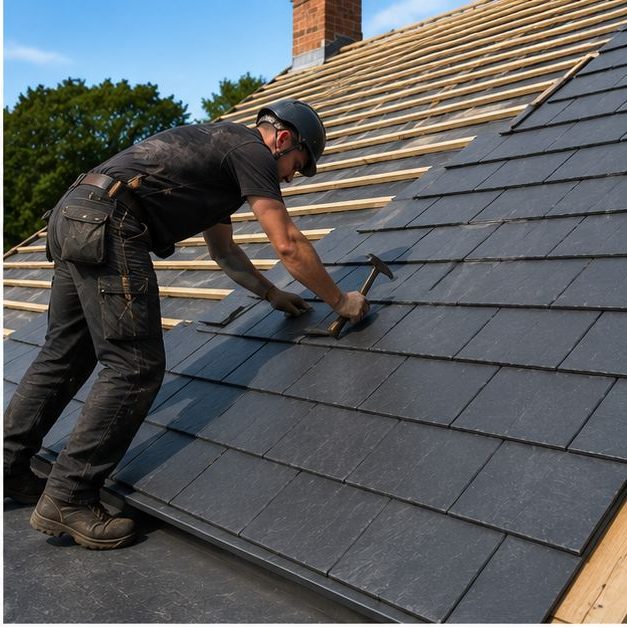
The process starts once the main field of tiles or slates has been laid on both sides of the roof up to the apex. The roofer sets a string line along the length of the ridge to keep it perfectly straight, which matters both for weather performance and for how the finished roof looks from the street. Any waviness along a ridge line is very noticeable, particularly on the long, straight runs of terraced roofs common in Bedminster, where a single house's ridge can be compared visually to a dozen others in the same row.
Traditionally, ridge tiles were bedded onto a run of mortar laid along the top course of the main roof covering, with each tile pressed in and pointed neatly at the joints. This method still has its place, but mortar can crack and loosen over time as the roof structure moves slightly with temperature changes, eventually letting water in at the ridge, which is exactly the failure that leads to many older roofs needing attention decades after they were first built.
On many modern installations, ridge tiles are instead fitted using a dry-fix system, where the tiles are mechanically clipped or screwed to a rigid batten running along the ridge, with a flexible seal beneath rather than mortar. This gives a fixing that does not rely on the mortar bond holding over decades, and also allows for a small amount of ventilation out of the roof space, which helps manage condensation building up beneath the covering in colder months.
Where a roof also has hips, meaning sloped rather than vertical ends, the same principles apply to the hip tiles running down each corner, and these are usually fitted using a matching method to the main ridge for consistency. On a terraced Bedminster roof this is less common than on detached or semi-detached properties, but where hips are present they need the same careful setting out and fixing as the ridge itself to avoid an obvious weak point at the corner of the roof.
Whichever method suits your roof, the ridge detail is one part of a re-roof worth asking a contractor to explain properly before work starts. Brunel Roofing Bristol can talk through the ridge options available for your Bedminster property and recommend an approach based on the roof's design and exposure to the elements.
Get a Free Quote for New Roof Installations in Bedminster
Every roof is different — the fastest way to get an accurate answer is a quick chat with our team.