
Every solar panel bracket fixed to a pitched roof creates a penetration through the covering, and how that penetration is weatherproofed makes the difference between a roof that stays watertight for decades and one that develops slow, hard-to-trace leaks. For homeowners across Yate considering solar, it is worth understanding what should actually happen at each fixing point before work begins, rather than simply trusting that it will be handled correctly. A roof can have dozens of these fixing points across a single array, so even a small weakness repeated at each one can add up to a significant risk over time.
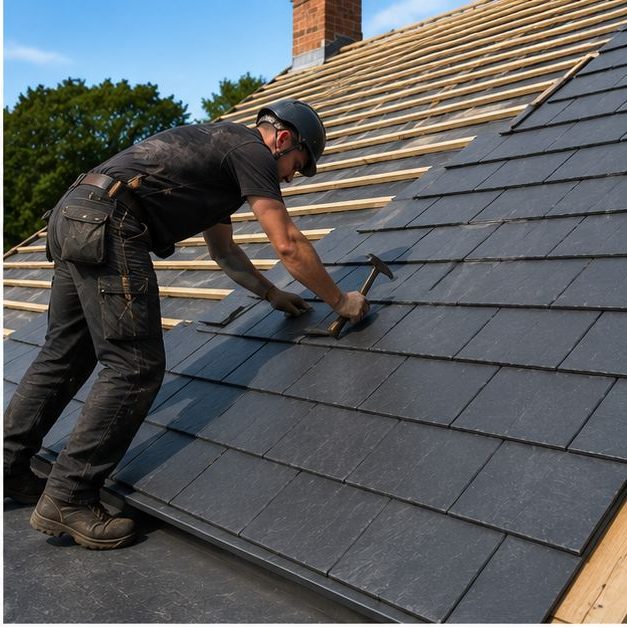
Most solar mounting systems are supplied with flashing kits designed to match the fixing type and, ideally, the tile or slate profile being used. These typically consist of a flexible or moulded flashing piece that sits around the bracket and integrates with the surrounding tiles, directing water around the fixing rather than allowing it to pool or find a way underneath. Using the correct flashing for the roof covering in question, rather than a generic one-size-fits-all part, is an important detail that is easy to overlook, particularly on a fast-turnaround installation.
Correct lapping is just as important as the flashing component itself. Water on a pitched roof always needs to be directed downhill and outward, so any flashing around a solar fixing has to overlap the tile or slate below it and sit under the one above, in the same way as any other roof detail such as a valley or a chimney abutment. Sealants and mastics have a role to play in some situations, but they should support good physical detailing rather than being relied upon as the only line of defence against water ingress, since sealant alone tends to degrade and fail over time.
This is one of the reasons it makes sense for the roofing side of a solar installation to be carried out, or at least closely overseen, by someone with genuine roofing expertise rather than left entirely to an electrical installer whose main focus is the panels and wiring. A solar company may be highly competent with the electrical side of a system while being less experienced with the roofing detail that keeps a Yate home dry underneath it, particularly on older or more unusual roof coverings. Asking who will actually be responsible for the roofing work, rather than assuming it is included, is a fair question to put to any solar installer.
Brunel Roofing Bristol carries out the roofing and flashing work around solar installations to the same standard we apply to any new roof, so fixings are weatherproofed properly from the outset. If you are having solar fitted in Yate and want the roofing detail handled by an experienced roofer, contact us to discuss the work involved before the installation date is set.
Get a Free Quote for New Roof Installations in Yate
Every roof is different — the fastest way to get an accurate answer is a quick chat with our team.