
One of the first decisions on any re-roofing project is what the new covering should actually be made of, and in Bishopston that question comes up often because the streets here mix Victorian and Edwardian terraces with later infill homes. Clay and concrete tiles can look broadly similar from the pavement, but they behave quite differently on a roof, and the right choice depends on the age and style of the property as much as on budget. Getting this decision right at the outset matters far more than it might seem, because once a tile type is chosen and fitted, changing it later means stripping the roof back and starting again, which is an expensive way to correct an early mistake.
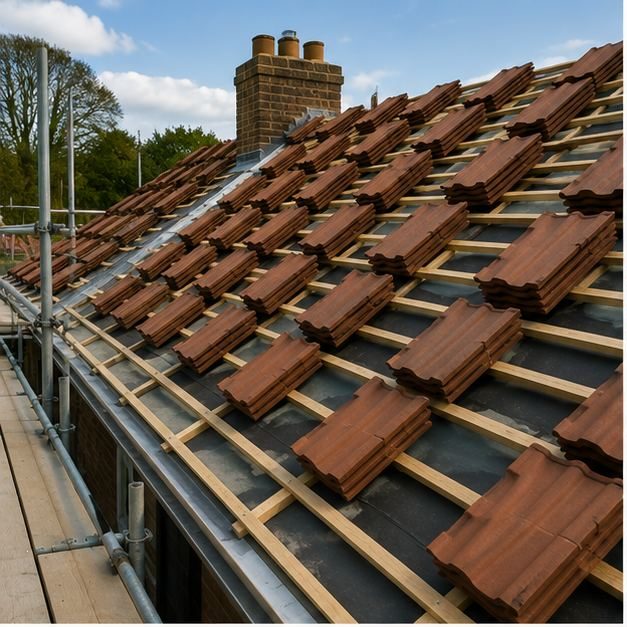
Clay tiles tend to suit the older bay-fronted terraces that give parts of Bishopston their period character. They hold colour well over decades, weather to an attractive muted finish rather than fading unevenly, and their slightly irregular, handmade look sits comfortably alongside original brickwork and timber joinery. The trade-off is cost: clay tiles are generally more expensive to buy and, because they're more brittle, need a careful fitter who won't crack them during handling or nailing. Their lighter weight compared with some concrete alternatives can also be an advantage on older roof structures that were never designed to carry a heavy load, particularly where the original rafters are of a slimmer, older-fashioned section than modern building standards would specify today.
Concrete tiles are the more budget-friendly option and have improved a great deal in appearance over recent years, with ranges now available that mimic the profile and colour of clay or even natural slate reasonably convincingly. They're heavier, which is occasionally relevant on older Bishopston roof structures where the timbers were sized for a lighter original covering, so it's worth having the rafters checked before committing to a like-for-like swap. Concrete is also more forgiving during installation and easier to source quickly, which can matter if a roof needs replacing without a long lead time, for example after storm damage or a sudden failure.
Appearance aside, there are practical differences worth weighing up. Clay is more resistant to moss and algae growth thanks to its smoother, denser surface, which can keep a roof looking cleaner for longer with less need for maintenance or periodic cleaning. Concrete tiles, meanwhile, are usually the more economical choice for larger roof areas or where a close colour match to neighbouring properties isn't essential, and modern ranges hold up well structurally even if they lack some of clay's subtlety of finish. On a terraced or semi-detached Bishopston home, matching what's next door is often as important as personal preference, since a mismatched roofline can stand out on a street where most houses share a similar age, pitch and tile profile, and where a jarring new roof can affect how the whole terrace reads from a distance.
Longevity is worth factoring in too. Well-fitted clay tiles can comfortably outlast concrete ones, sometimes by several decades, which changes the maths if you're planning to stay in a Bishopston property for the long term rather than a few years. Concrete tiles still perform reliably and carry manufacturer guarantees of their own, but a homeowner thinking about a forever home versus a shorter-term move might reasonably weigh this differently when deciding where to spend the budget.
Brunel Roofing Bristol can talk through samples of both materials against your specific roof and street setting, so you're not choosing blind or relying on a photograph alone. If you'd like advice on which tile suits your Bishopston property, along with a clear breakdown of the cost difference between the two, get in touch for a quote and a straightforward recommendation.
Get a Free Quote for New Roof Installations in Bishopston
Every roof is different — the fastest way to get an accurate answer is a quick chat with our team.