
Every pitched roof has edges, at the eaves, verges and any abutments, where the roof covering stops and water is forced to change direction. These edges are consistently the most exposed parts of a roof, and they are where water damage tends to start long before problems appear in the main field of tiles. Around Kingsweston, where homes sit close to open green space and take the full force of prevailing wind and rain, protecting these edges properly is a genuine priority rather than an afterthought.
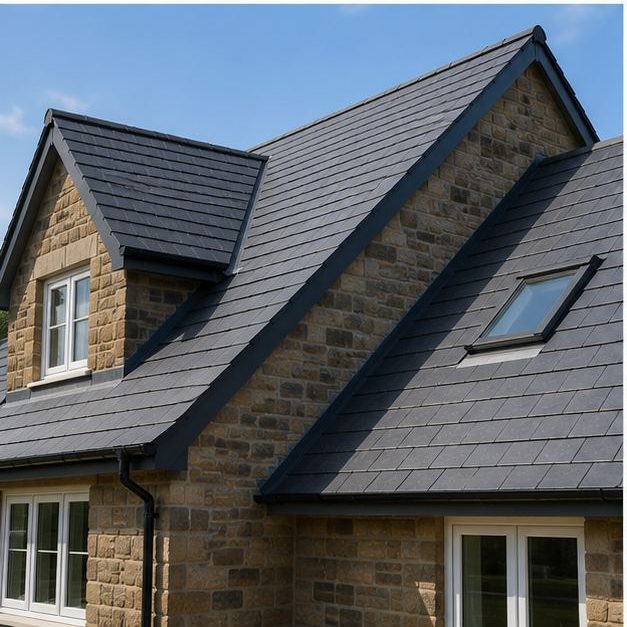
At the verges, the gable edge of the roof needs a detail that stops wind-driven rain from being pushed sideways underneath the tiles. Traditionally this was done with mortar bedding, which looks neat when new but is prone to cracking and falling away within a handful of years, letting water track in behind it. Many modern re-roofs use a dry verge system instead, which relies on mechanically fixed units rather than mortar and holds up far better over time without the recurring maintenance that mortar verges typically demand.
At the eaves, the risk is slightly different. Water concentrates here as it runs off the whole roof slope, so the detail needs to shed that volume cleanly into the gutter without allowing any of it to track back towards the fascia or wall head. A correctly fitted eaves tray, tilting fillet and properly overhanging first tile course all work together to keep water moving in the right direction, and getting any one of these wrong can lead to slow, hidden timber decay that is only discovered years later, often once the fascia or rafter feet have already been compromised.
Where a roof meets a chimney, wall abutment or a lower adjoining roof, similar principles apply. Flashing needs to be dressed correctly into the joint so that water is shed outward rather than allowed to sit against brickwork or find its way into the gap between roof and wall. These junctions are less visible than the eaves or verges from the street, which unfortunately also means problems here can go unnoticed for longer.
Because edge details are made up of several small components working together, they are also where corners get cut most easily on a rushed or under-specified job. When we carry out a new roof installation in Kingsweston, we treat the eaves, verges and abutments as a core part of the specification rather than a finishing touch, using proper trims, trays and fixings throughout rather than relying on mortar or sealant to do the job on its own.
If you are unsure whether the edges of your current roof are still doing their job, a visual check from the ground for staining, moss growth or dislodged trim near the eaves and verges can tell you a lot. Brunel Roofing Bristol can carry out a closer inspection of your Kingsweston property and advise honestly on whether the edge details need attention as part of a wider re-roof.
Get a Free Quote for New Roof Installations in Kingsweston
Every roof is different — the fastest way to get an accurate answer is a quick chat with our team.