
When a re-roof is being planned, it's easy to focus purely on the tiles, slates and underlay and forget about the fascias and soffits running along the eaves. These boards do a quieter but important job, supporting the guttering, closing off the roof void from the outside, and in many cases providing the ventilation gaps that let the loft breathe properly. Their condition is worth reviewing at the same time as the main roof covering, not afterwards as an unrelated task once the scaffold has already come down and access has become far more difficult and costly to arrange again for what might be a relatively small amount of work.
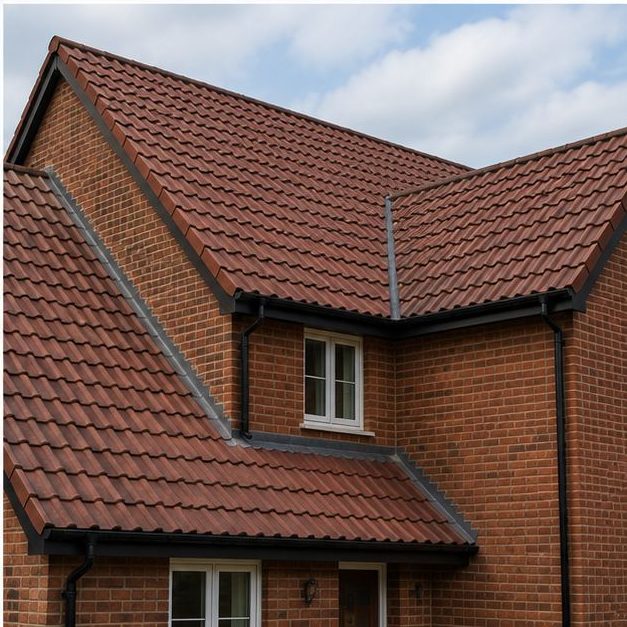
In Bishopsworth, where you'll find everything from older timber fascias on longer-established houses to more recent uPVC boards on newer builds, the age and material of these components varies considerably from property to property. Timber fascias in particular are prone to rot, cracking and paint failure over time, especially where guttering has overflowed repeatedly and kept the timber behind it damp for extended periods, which weakens the fixing points that the gutter brackets rely on and can eventually let a gutter section sag or pull away from the roof edge entirely, sending water down the wall instead of into the drainage system. Peeling paint or a soft, spongy feel when pressed are both early warnings that timber fascias are heading in that direction.
There's a practical argument for dealing with fascias and soffits during the re-roof itself rather than as a separate job later. Scaffolding is already up, the eaves are already exposed while tiles at the roof edge are being handled, and access to that area is at its easiest. Coming back for a standalone fascia replacement later usually means paying for scaffold access all over again for work that could have been done efficiently in one visit, which adds unnecessary cost for very little practical benefit and simply extends the overall disruption to the property across two separate projects instead of one. It also means matching new guttering brackets and downpipe positions to a roof edge that's already finished, which is more fiddly than doing it all together.
It's not always necessary, though. If your fascias and soffits are sound, reasonably modern, and simply need a clean or a repaint, there's no need to replace something that still has years of life left in it. A sensible assessment looks at the actual condition of the boards, not just their age, before recommending replacement, so you're not paying to swap out timber or uPVC that's still doing its job perfectly well and would only need attention again many years down the line, well after the new roof covering itself might need revisiting.
If you're having a new roof fitted in Bishopsworth and want an honest opinion on whether your fascias and soffits should be replaced at the same time, Brunel Roofing Bristol can check them as part of the initial inspection and factor it into your quote so there are no surprises later.
Get a Free Quote for New Roof Installations in Bishopsworth
Every roof is different — the fastest way to get an accurate answer is a quick chat with our team.