
Henleaze's tree-lined streets and long-established housing mean that many roofs in the area are now several decades old, and while a well-built roof can carry on quietly for years, there comes a point where the small warning signs start to add up to something more serious. Rather than waiting for a leak to force the issue, it helps to know what to actually look for, both from the ground and inside the loft, so that a decision about replacement can be made calmly rather than in a panic during a storm.
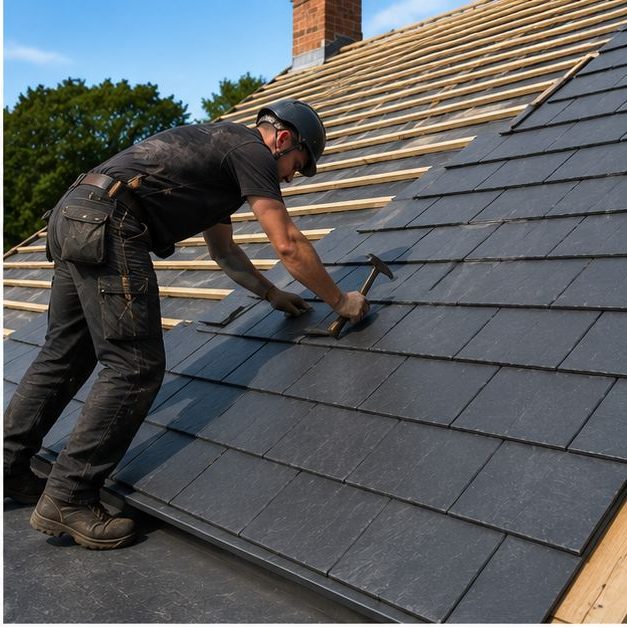
The first cluster of signs relates to the tiles or slates themselves: cracked or chipped edges, tiles that have visibly slipped out of line, and patches where the surface colour looks noticeably different from the rest of the roof, often a sign of repairs carried out at different times with mismatched materials. A build-up of granules or grit in the gutters is another early clue, particularly with concrete tiles, since it shows the protective surface is wearing away faster than it should. Tiles that look thin, brittle or unusually light when one is picked up during other work are worth noting too, as this is often an early stage of the same wearing process.
A second group of signs shows up around the edges and joints of the roof rather than across the main tiled area. Flashing around chimneys and valleys that has lifted, corroded or been crudely patched with sealant is a common weak point on older Henleaze roofs, as is a ridge line that no longer runs straight, sagging slightly in the middle where the roof structure has begun to settle. Damp or mossy patches that keep returning to the same spot despite previous repairs suggest the problem lies deeper than a single tile, and gaps opening up where the roof meets a neighbouring wall or dormer cheek are another sign worth taking seriously.
The remaining signs are often only found by going inside. Daylight visible through the roof timbers when you look up from the loft, damp staining on the underside of the felt or rafters, and insulation that feels damp to the touch all point towards a covering that is no longer keeping water out reliably. A noticeable rise in heating bills over the years, once other causes have been ruled out, can also reflect a roof that has lost some of its weatherproofing and insulating performance, as can a musty smell in upstairs rooms that never quite clears, even when there is no visible staining to explain it.
No single sign on this list automatically means a roof needs replacing, but two or three appearing together is usually a strong indication that repair alone will not be enough. If several of these points sound familiar for your Henleaze property, it is worth arranging for Brunel Roofing Bristol to take a proper look and advise honestly on whether replacement makes more sense than continuing to patch.
Get a Free Quote for New Roof Installations in Henleaze
Every roof is different — the fastest way to get an accurate answer is a quick chat with our team.