
It's a common misconception that a slate roof fails because the slates themselves wear out. In practice, on the older housing stock found throughout Cotham, it's usually the fixings holding the slates in place that give way long before the slate is finished. Understanding why this happens explains why a roof can look largely intact from the ground while quietly becoming unsafe underneath, and why the fix isn't always as simple as replacing what's visibly missing.
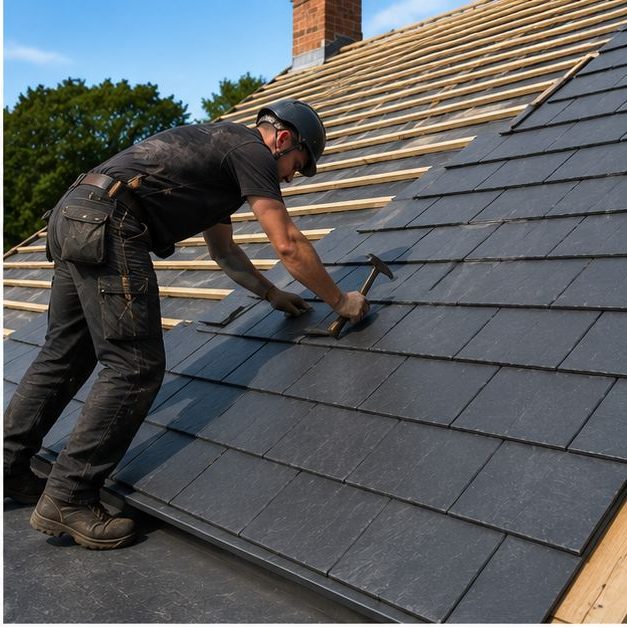
The original nails used on Victorian and Edwardian roofs were often iron, and iron corrodes over time when exposed to the moisture that inevitably finds its way through a roof covering over many decades. As the nail rusts, it loses its grip on the slate and eventually shears or crumbles away entirely, a condition known in the trade as nail sickness. This is progressive rather than sudden, so a roof might lose a handful of slates one winter and considerably more the next as the corrosion spreads steadily across the fixings from one area of the roof to another.
Roof pitch and exposure also play a part. Some of Cotham's steeper Victorian roofs and taller Georgian frontages catch more wind-driven rain than a shallower modern roof would, which accelerates the corrosion process on the fixings even where the slates themselves are of good quality. Chimneys, valleys and hip lines add further stress points where water can linger slightly longer, making fixing failure more likely in those specific locations first. Poor original workmanship, or repairs carried out decades ago with mismatched materials, can also create weak points that fail well ahead of the rest of the roof.
Once fixing failure becomes widespread rather than isolated, patch repairs stop being a sensible long-term answer, since replacing a handful of slates does nothing for the hundreds of other ageing nails still holding the rest of the roof together. Brunel Roofing Bristol assesses fixing condition as a matter of course on every inspection, using modern, corrosion-resistant fixings such as copper or stainless steel nails on any replacement work carried out, so the next generation of the roof doesn't face the same problem decades from now.
There's usually a pattern to how fixing failure shows itself before a homeowner even calls a roofer. Slate loss often accelerates noticeably after a run of stormy weather, with several slates coming down in quick succession rather than a slow, steady trickle over years, simply because a batch of nails corroded to a similar degree all fail under similar wind loading at roughly the same time. Recognising this pattern for what it is, rather than treating each loss as an isolated one-off event, is often the first clue that a wider problem is developing across the whole roof.
If you've noticed slates coming loose more frequently than they used to, it's a good indication that the fixings, not the slate, are the underlying problem, and Brunel Roofing Bristol can talk you through what that means for your particular roof.
Get a Free Quote for New Roof Installations in Cotham
Every roof is different — the fastest way to get an accurate answer is a quick chat with our team.