
A roof that only leaks during heavy or prolonged rain, rather than every time it rains at all, usually points to a specific type of fault rather than a general failure of the roof covering.
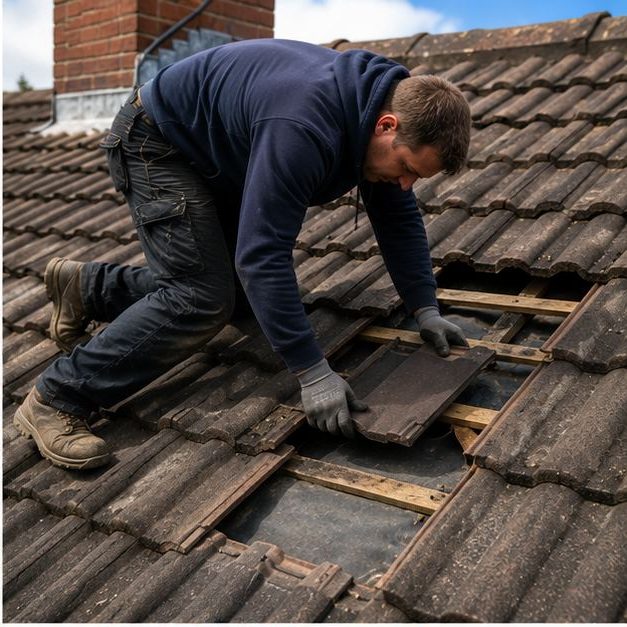
Why Heavy Rain Exposes Hidden Weak Points
Light rain often just isn't enough water, or enough wind-driven force, to push through a small gap, hairline crack, or slightly displaced tile, whereas sustained heavy rain gives water time to find its way through the same weak point. Wind-driven rain during a storm can also drive water sideways under tiles or through flashing joints that would otherwise shed water perfectly well in calmer conditions.
Overwhelmed guttering and downpipes during a heavy downpour can also cause water to back up and overflow onto the roof or down the wall, which can look and feel exactly like a roof leak even though the roof covering itself is fine.
Likely Culprits Worth Checking
Common causes include cracked or lifted flashing around chimneys and roof windows, deteriorated mortar on ridge or hip tiles, a valley that's become partially blocked with moss or debris, and ageing underlay that's no longer fully waterproof even though the tiles above look intact. On flat roofs, pooling water finding a weak seam during a long downpour is a frequent cause too.
It's also worth remembering that a leak appearing further from the actual point of entry is common in heavy rain, since more water means it travels further along the timber before finding a way through the ceiling.
What to Do Next
Because these faults are often small and hard to spot from ground level, an intermittent leak is best diagnosed with a proper inspection rather than repeated guesswork. Brunel Roofing Bristol can trace the source and carry out the repair, ideally before the next heavy spell of Bristol weather puts more strain on it.
Get a Free Quote for Roof Repairs
Every roof is different — the fastest way to get an accurate answer is a quick chat with our team.