
It is easy to judge a roof by what can be seen from the pavement, and on plenty of Eastville streets the tiles or slates themselves can look perfectly presentable, straight, unbroken and free of any obvious cracking or slippage. What is much harder to assess without actually getting into the loft is the condition of the roofing felt, or underlay, sitting beneath those tiles. This hidden layer does a great deal of the actual work of keeping water out, and its condition does not always match the appearance of the covering visible above it.
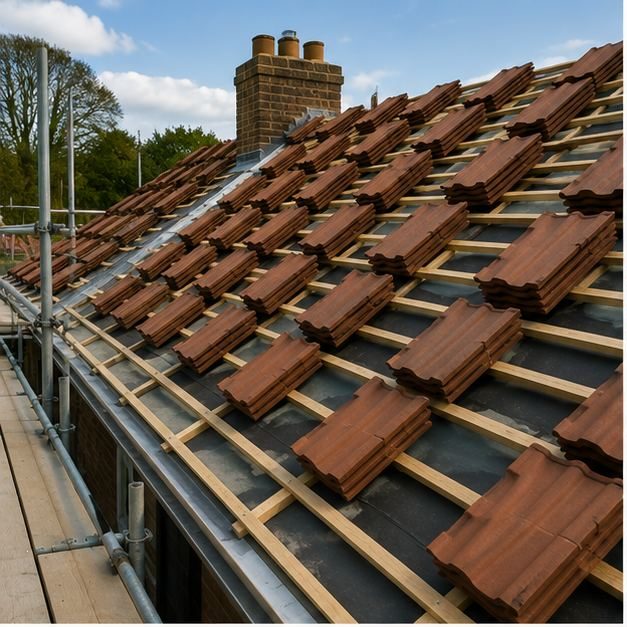
Older bitumen felt in particular tends to become brittle with age and prolonged sun exposure, losing the flexibility it had when it was first laid. Long before it fails completely, it can develop small tears, splits and cracks that allow wind-driven rain to pass through, especially where individual tiles have shifted slightly out of position or where nail fixings have created tiny puncture points that widen gradually over the years. Because the tiles above are still doing their primary job of shedding the bulk of the rainfall in normal conditions, this underlying deterioration can go unnoticed for a surprisingly long time, sometimes many years.
The risk with old felt is that by the time it becomes visibly obvious, usually as damp timber or staining seen from inside the loft, or occasionally as a stain finally reaching the ceiling below, it has often already been letting some moisture through for a while. Roof timbers and loft insulation can be affected before any sign at all appears on the ceilings people actually see day to day, which is one reason a proper loft inspection can be considerably more revealing than a look at the roof from outside, however careful that external inspection might be. A torch and a few minutes spent up in the loft will usually tell a homeowner far more about the true state of their roof than standing on the pavement ever could.
When Brunel Roofing Bristol assesses an Eastville roof where the tiles appear sound from the outside, checking the underlay from the loft is a standard part of the process rather than an afterthought tacked on at the end. Modern breathable membranes offer a considerable improvement over old bitumen felt in terms of both durability and how they manage moisture, and where a roof is being re-covered, replacing this layer properly is one of the most important parts of the work even though it is completely hidden from view once the job is finished and the tiles go back on.
If your roof looks fine from the street but you are unsure how old the underlay might be, particularly on a property that has not had any roofing work carried out for many years, it is worth having it checked rather than simply assuming everything beneath the tiles is in equally good condition. Brunel Roofing Bristol can take a look from the loft and let you know exactly what is going on underneath, with no obligation attached to the visit.
Get a Free Quote for New Roof Installations in Eastville
Every roof is different — the fastest way to get an accurate answer is a quick chat with our team.