
Many of the older roofs we look at in Sneyd Park still have their original mortar verges, and it is common to find sections that have cracked, loosened or fallen away entirely. This is not usually a sign of a poorly built roof; it is simply what happens to cement mortar exposed to decades of British weather, especially on the elevated and exposed sites found in parts of this area near the Downs and the Avon Gorge, where wind and driving rain reach the roof edge with more force than in more sheltered streets.
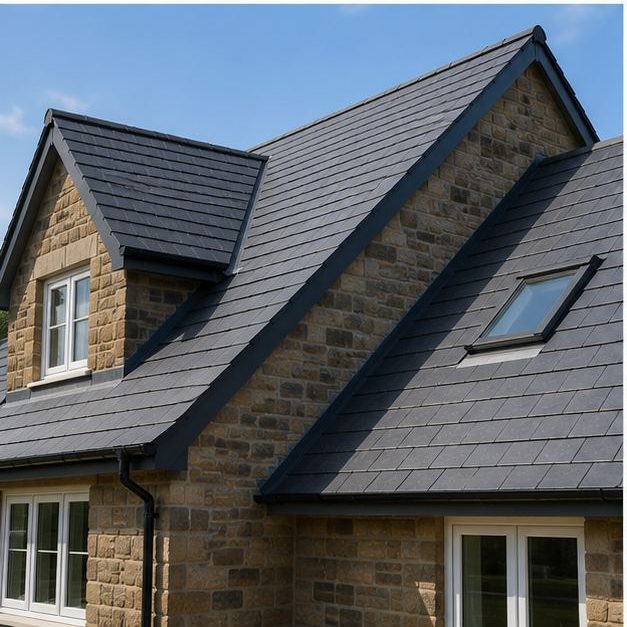
Mortar is a rigid material bonded to tiles and timber that both expand and contract with temperature, at slightly different rates from the mortar itself. Over many freeze-thaw cycles, tiny cracks form as moisture gets into the mortar and then freezes, and each cycle widens the crack a little further. Eventually the bond between the mortar and the tile edge fails, and sections can lift, crumble or drop off completely, sometimes without warning, occasionally leaving debris in a garden below. This slow, repetitive cycle of expansion and contraction is also why mortar verges rarely fail suddenly across their whole length, instead deteriorating gradually over many years before the extent of the problem becomes obvious.
The original mix used decades ago can also be a factor. Older mortars were not always proportioned as consistently as modern equivalents, and some verges were pointed in conditions or with materials that made early cracking more likely. On semi-detached and detached houses with long, exposed gable ends, this ageing process tends to show up first at the highest and most weather-facing sections of the roof, often on the side that takes the prevailing wind and rain.
It is also worth noting that mortar verges rarely fail evenly. One gable might show significant cracking while another on the same house, more sheltered by a neighbouring building or mature planting, remains largely intact. This uneven pattern of deterioration is one reason a full inspection of every verge is worthwhile rather than assuming the condition of one tells you about the rest of the roof.
Once a mortar verge starts to fail, water can find its way behind the edge tiles and onto the roof timbers beneath, which is why isolated cracking on an otherwise sound roof can usually be repaired, but widespread crumbling across several verges is a stronger indicator that the roof covering as a whole is reaching the end of its serviceable life and that a full re-roof may offer better long-term value than a series of repeated patch repairs.
If you have noticed cracked or missing verge mortar on your Sneyd Park property, it is worth having it looked at before the next spell of wet or freezing weather. Brunel Roofing Bristol can inspect the roof and advise honestly on whether a repair will hold or whether a full replacement, with a more durable verge detail, is the better option.
Get a Free Quote for New Roof Installations in Sneyd Park
Every roof is different — the fastest way to get an accurate answer is a quick chat with our team.