
The verge, where a roof meets the gable end of a house, is another area that takes a disproportionate share of wind pressure compared with the main field of the roof. Wind striking the side of a building tends to concentrate along this edge before spilling over the ridge, which is why verge tiles are often among the first to show signs of movement on an ageing roof, sometimes years before problems appear anywhere else. On more open sites around Nailsea, this effect can be considerably more pronounced than it would be on sheltered, closely built streets nearer the town centre, particularly where a gable end faces directly into open fields or an unobstructed stretch of road.
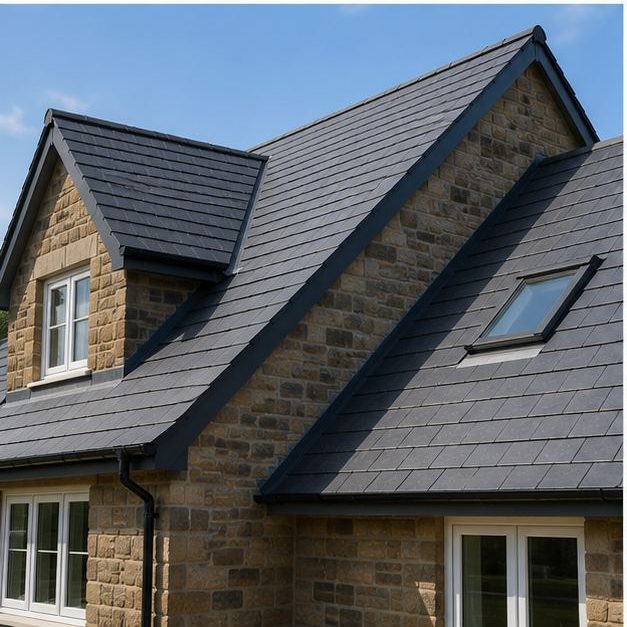
Older verges were commonly bedded in mortar, a method that can look tidy and traditional when first applied but is prone to hairline cracking as the roof structure moves slightly with temperature and weather over the years that follow. Once cracks appear, water can get in behind the tiles, and the freeze-thaw cycle common in a British winter can widen those cracks further with each passing season, gradually loosening the whole verge line until tiles begin to shift.
Dry verge systems offer a mechanically fixed alternative that avoids this reliance on mortar altogether, using interlocking units that clip firmly onto the roof structure rather than depending on a bedding material that will inevitably age and weaken. This tends to hold up far better under sustained wind pressure over many years, and it also reduces the amount of exposed mortar that needs future maintenance or repointing. For a gable end that regularly takes the weather head-on, this kind of detail is worth specifying properly rather than treating as an afterthought once the main tiling has already been decided.
It is also worth thinking about how the verge interacts with the roof's edge tiles and undercloak, since these components all work together at the same junction. A verge that has been finished with mismatched or poorly bedded edge tiles can still let wind find a way underneath, even if the visible detail looks reasonably tidy from below. This is a part of the roof that rewards careful, unhurried installation more than almost any other, precisely because problems here are so easy to miss until they have already caused damage further into the structure.
When Brunel Roofing Bristol plans a new roof, verge detailing is considered alongside the main tiling specification from the outset, since a roof that performs well across its main slopes but has a weak verge has simply moved the vulnerable point elsewhere rather than removing it from the building altogether.
If your Nailsea home has an exposed gable end that regularly bears the brunt of the wind coming off open ground nearby, it is worth mentioning this specifically when arranging a quote, so the verge detail can be specified to match the conditions your particular house faces.
Get a Free Quote for New Roof Installations in Nailsea
Every roof is different — the fastest way to get an accurate answer is a quick chat with our team.