
Spalling brick is one of the more common problems found on Clifton's older chimney stacks, particularly where water has been allowed to soak into the brick face over successive winters. What starts as a small area of flaking or crumbling surface can, left unaddressed, progress to bricks that are visibly breaking apart, weakening the wider structure of the stack around them and eventually affecting neighbouring courses too. Brick, for all its durability, is still a porous material, and its long-term performance depends heavily on the mortar and detailing around it staying in good condition.
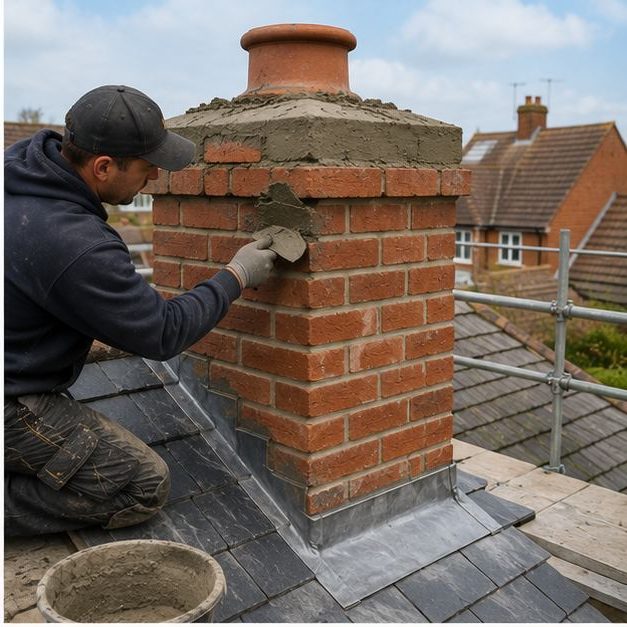
The underlying cause is usually straightforward: water gets into the brick, and when it freezes it expands, forcing the surface of the brick to fracture and flake away. This happens more readily where mortar has failed and is no longer directing water away from the brick face, which is why spalling and failed pointing so often appear together on the same stack, one problem feeding directly into the other over successive seasons. It's also worth noting that spalling tends to accelerate once it starts, since each damaged brick exposes more surface area to further water penetration, which is why early intervention makes a genuine difference to the overall scope of repair needed.
Where damage is limited to a handful of bricks, individual replacement, sometimes called indenting, is usually the right approach. Damaged bricks are cut out and replaced with matching brick, ideally reclaimed or closely matched in size, colour and texture to the surrounding masonry, so the repair blends in rather than standing out as an obvious patch on a period stack that's otherwise in reasonable condition.
More extensive spalling, where a large proportion of the visible brick face on a section of the stack has deteriorated, may point toward a partial rebuild being more practical than replacing bricks one at a time. This is a judgement call best made in person, since the extent of damage isn't always obvious from ground level on Clifton's taller terraced properties, and photographs alone rarely tell the whole story.
Addressing the mortar at the same time as replacing damaged brick is important, since new brick set in failing or incompatible mortar will simply be exposed to the same conditions that caused the original damage. On period brickwork, that generally means a lime-based mix rather than a hard cement pointing, chosen specifically to complement the age and type of brick involved. A skilled bricklayer will also consider how the replacement brick's texture will weather over time, since a slightly mismatched colour today often blends in naturally within a year or two as it ages alongside the original brickwork.
If you've noticed flaking or crumbling brick on a chimney in Clifton, it's worth getting it looked at before the next winter's frosts make the problem worse. Brunel Roofing Bristol offers free inspections and can advise on the most appropriate repair for weathered masonry.
Get a Free Quote for Chimney Repairs in Clifton
Every chimney is different — the fastest way to get an accurate answer is a quick chat with our team.