
Chimney brickwork problems on St Pauls properties tend to develop gradually, which means the damage visible today is often the result of several years of moisture getting into the stack rather than anything sudden. Recognising the early signs makes the eventual repair smaller, cheaper and considerably less disruptive than waiting until the problem is obvious from the pavement, by which point several courses of brick may already be affected. Acting early is almost always the cheaper path, even though it can feel like an unnecessary expense at the time, particularly when the chimney still looks structurally fine from a distance.
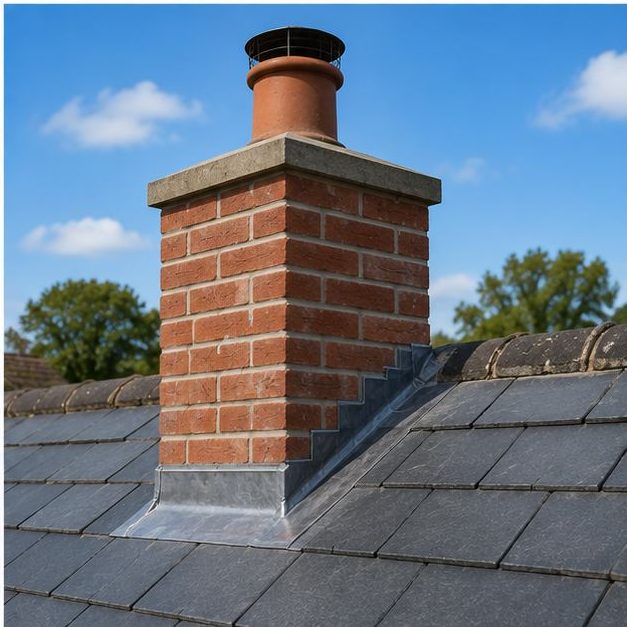
Spalling is the most common issue, where the outer face of a brick cracks and flakes away after trapped moisture freezes and expands during cold weather. It typically starts in bricks near failed mortar joints, where water has an easy path in, and spreads to neighbouring bricks over successive winters if left unaddressed. From the ground it can look like discolouration or a rough texture, but up close the damage is often more extensive, with the brick's outer face effectively gone and the softer material beneath exposed to further weathering. North-facing stacks, which stay damp for longer after rain, often show this kind of damage earliest.
Cracking that runs consistently through several courses of brick, rather than being confined to individual bricks or mortar joints, is a more serious sign and suggests the stack may have experienced some structural movement rather than simple surface weathering. This needs a proper assessment rather than cosmetic repair, since patching over movement-related cracking without addressing the underlying cause tends to be a short-lived fix that reappears within a season or two. It's worth flagging this kind of cracking as a priority rather than something to watch and wait on.
For straightforward spalling, repair generally means replacing the worst-affected bricks with closely matched replacements and repointing the surrounding area at the same time, since brick and mortar deteriorate together on older St Pauls properties and treating one without the other rarely gives a lasting result. Sourcing bricks that match the original in size, colour and texture takes a bit more effort on period properties, but it's worth it for both appearance and long-term performance of the finished repair, particularly on a terrace where the chimney is a visible part of the streetscape.
Using the correct mortar throughout, lime-based for older brick rather than a hard modern cement mix, matters just as much here as with any other chimney repair, since the wrong mortar can undermine even carefully matched brick replacement. It's a small specification detail with a big effect on how long the finished repair actually lasts.
If your chimney's brickwork is showing cracking or crumbling, Brunel Roofing Bristol can assess the extent of the damage and provide a free, honest quote for St Pauls homeowners, whatever the scale of work turns out to be.
Get a Free Quote for Chimney Repairs in St Pauls
Every chimney is different — the fastest way to get an accurate answer is a quick chat with our team.