
Lead flashing is one of those components that, when it's working properly, nobody ever notices — which is exactly why its gradual failure often goes unnoticed too, until a leak finally appears somewhere inside the house. Across Henbury, with its mix of older cottages and later post-war housing, the reasons flashing fails vary slightly depending on the age and construction of the property, but the underlying mechanics are largely the same throughout the area regardless of when the house itself was built.
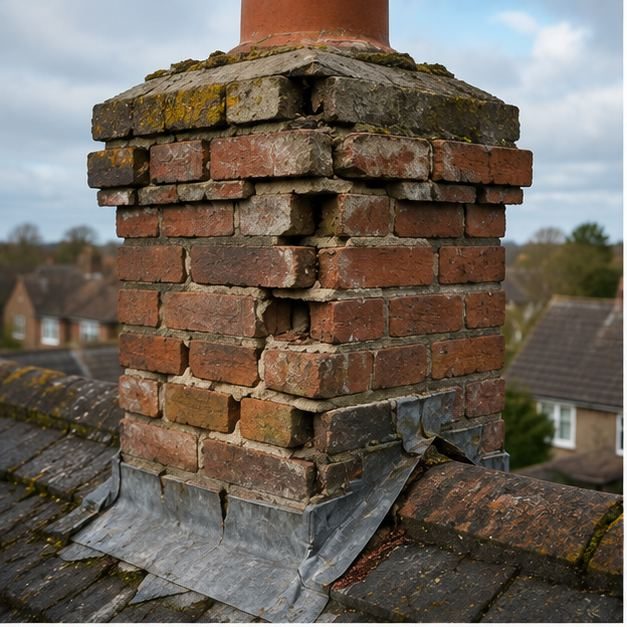
The main cause is thermal movement. Lead expands and contracts with temperature far more than the brick or mortar it's fixed against, and over years of repeated cycles, this movement causes fatigue — tiny cracks that gradually widen, or the lead lifting away from the mortar joint it was originally dressed into. Poor original installation can accelerate the process too, particularly on some post-war housing where flashing details weren't always given the same attention as on older, more traditionally built stacks that were often the work of experienced tradespeople working to a higher standard of finish.
Once flashing has failed, water finds its way in at the roof-to-chimney junction and can travel some distance before it becomes visible as a stain or damp patch inside the property — often not directly below the actual point of entry, which can make the cause harder to pin down without a proper inspection. A leak that seems to come and go with particular weather conditions, appearing after driving rain from one direction but not another, is a fairly reliable sign that flashing, rather than general porosity in the brickwork, is the culprit behind the problem. Older cottages in the area sometimes have flashing that was replaced at some point using undersized lead, a common shortcut in past decades that tends to fail sooner than a properly specified repair carried out to current standards.
Repairs range from resealing and re-dressing flashing that's structurally still sound but has come loose in places, through to a full strip-out and replacement using new lead where fatigue or damage is more extensive. Soakers and the back gutter, tucked in around the base and sides of the stack, need the same attention as the main flashing itself — a repair that only addresses the visible front section can leave a leak path elsewhere on the same junction, undoing much of the benefit of the work already carried out and paid for.
Because Henbury covers such a range of house types, from older properties near the original village core to later estate housing, the right specification for flashing repairs can vary — what's appropriate for one roof pitch or construction style isn't always right for another, which is where an experienced eye is genuinely useful in getting the detail right the first time around.
If you've noticed a leak that seems connected to your chimney, Brunel Roofing Bristol can carry out a free inspection to identify exactly where it's coming from and what repair will actually resolve it, backed by a 15-year guarantee.
Get a Free Quote for Chimney Repairs in Henbury
Every chimney is different — the fastest way to get an accurate answer is a quick chat with our team.