
Lead flashing is one of those elements of a chimney that quietly does its job for years and then, once it fails, causes a problem that seems to appear from nowhere. For Sneyd Park homeowners, that usually means a damp patch appearing on a ceiling or wall somewhere near a chimney breast, often with no obvious external sign that anything is wrong, which can make it a genuinely confusing problem to diagnose without professional help.
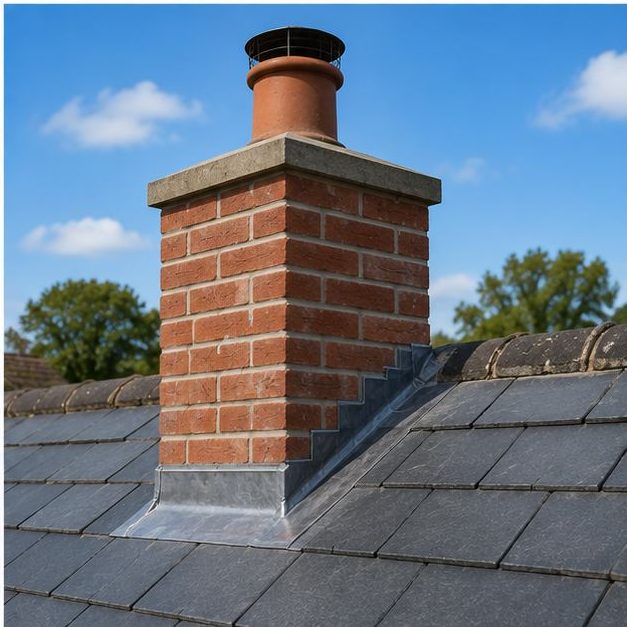
It's worth understanding that a leak found indoors is not always directly below where water is actually entering. Water can travel along a rafter or run beneath the roof felt before it finds a way through the ceiling, sometimes appearing a reasonable distance from the chimney itself. Tracing the actual source back to the flashing, rather than simply treating the visible stain, is the only way to stop the problem recurring after each spell of heavy rain.
Flashing failure tends to develop over time rather than happen suddenly. Lead dressed into a mortar joint can work loose as the chimney and roof structure move slightly with seasonal temperature changes, and on older properties in Sneyd Park, flashing installed some decades ago using a thinner lead gauge than would be specified today is often simply reaching the natural end of its life. Soakers, the smaller pieces of lead woven between tiles at the sides of the stack, are also prone to shifting or corroding independently of the main flashing, so a full check needs to cover both. Even a hairline gap along the edge of the flashing is enough for driving rain to exploit during a storm.
Repairs generally involve either re-dressing the existing lead back into freshly cleaned and repointed joints, or replacing sections that have thinned, split or corroded beyond a simple fix. Because this work is carried out at roof level, often on taller properties where safe access needs scaffolding rather than a ladder, it's not a job to attempt informally, however tempting a quick DIY patch might seem. A proper repair also means checking the condition of the mortar the lead is dressed into, not just the lead itself, since fresh lead pressed into failing mortar won't stay in place for long.
Left unresolved, a failing flashing joint tends to let in progressively more water each winter, which can mean the difference between a straightforward lead repair and a job that also involves drying out and repairing damaged timber or plasterboard, adding considerably to the eventual cost and disruption. A repair carried out at the first sign of trouble is almost always the more economical route in the long run.
If you've noticed damp near a chimney breast in your Sneyd Park home, Brunel Roofing Bristol can trace the source and provide a free quote for the repair, with 24-hour emergency call-out available if it needs urgent attention rather than being left until the next scheduled visit.
Get a Free Quote for Chimney Repairs in Sneyd Park
Every chimney is different — the fastest way to get an accurate answer is a quick chat with our team.