
A damp patch appearing near a chimney breast is one of the more common calls Redfield homeowners end up making, and it is not always as straightforward to diagnose as it first appears. Water entering at the chimney does not necessarily travel straight down to the point where damage becomes visible — it can run along roof timbers, track down the inside face of the chimney breast, or follow a masonry joint for some distance before finally showing itself on a ceiling or wall below.
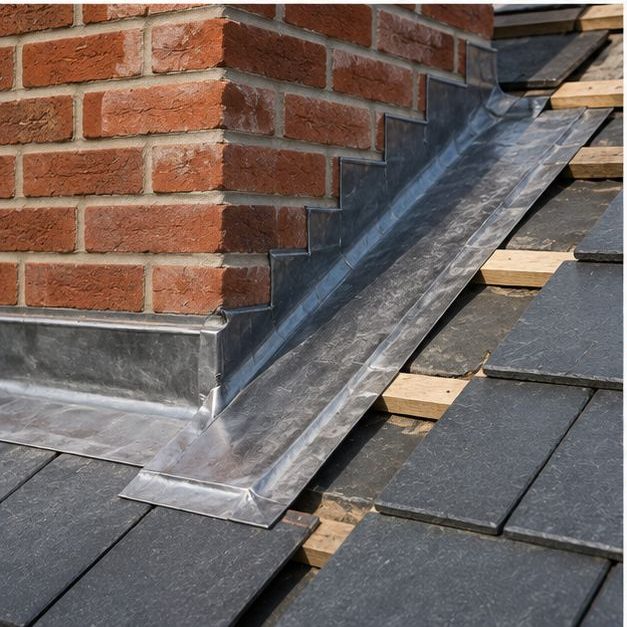
There are a few tell-tale signs worth checking before assuming the worst. A leak that only appears during or shortly after heavy rain, particularly rain driven from a specific direction, often points to failed flashing or a cracked flaunching at the top of the stack rather than a problem with the roof tiles themselves. A musty smell in the loft near the chimney, or discolouration on timber close to the stack, can indicate a slower, longer-running leak that has not yet reached the point of causing a visible ceiling stain, and this kind of gradual leak is often the more damaging of the two over time.
On Redfield's Victorian terraced housing, where chimney stacks are often original and have had varying standards of maintenance over the decades, the most frequent culprits are eroded mortar joints, lifted or cracked lead flashing at the base of the stack, and deteriorated flaunching at the top allowing water to track down inside the flue or between brick courses. Disused, capped chimneys are not immune either — a poorly sealed cap can let water in just as easily as an active flue with damaged pointing, so a leak near an old, unused fireplace should never be automatically ruled out as chimney related.
Proper diagnosis really does need a hands-on inspection of the stack itself, ideally alongside a check inside the loft space where the chimney breast passes through, since working backwards from a ceiling stain alone can lead to time and money spent on the wrong repair. Tracing the actual entry point first avoids the common mistake of re-roofing or resealing an area that was never actually the problem.
Once the source is identified, repairs are usually straightforward — repointing, reflashing, or renewing flaunching as appropriate — and considerably cheaper than the cost of ongoing water damage to timber and plaster if the leak is left to continue unaddressed through another winter. Acting quickly once a leak is confirmed generally keeps the repair simple and contained rather than letting it grow into something bigger.
If you've got a leak near a chimney in your Redfield home that you can't quite pin down, Brunel Roofing Bristol offers free inspections to trace the actual source, with repair work covered by a 15-year guarantee and 24-hour emergency call-out for urgent leaks.
Get a Free Quote for Chimney Repairs in Redfield
Every chimney is different — the fastest way to get an accurate answer is a quick chat with our team.