
A chimney leak is one of those problems that feels urgent the moment it appears, usually as a damp patch on a ceiling or the top of a chimney breast, but stopping it properly means understanding where the water is actually getting in rather than treating the first visible symptom. In Westbury-on-Trym, where many properties have older, taller stacks, that diagnostic step matters more than it might on a simpler, more modern roof, where problems tend to be more straightforward to trace. Older stacks in particular can have several ageing components at once, which makes a systematic check more valuable than trying to guess at a single obvious cause.
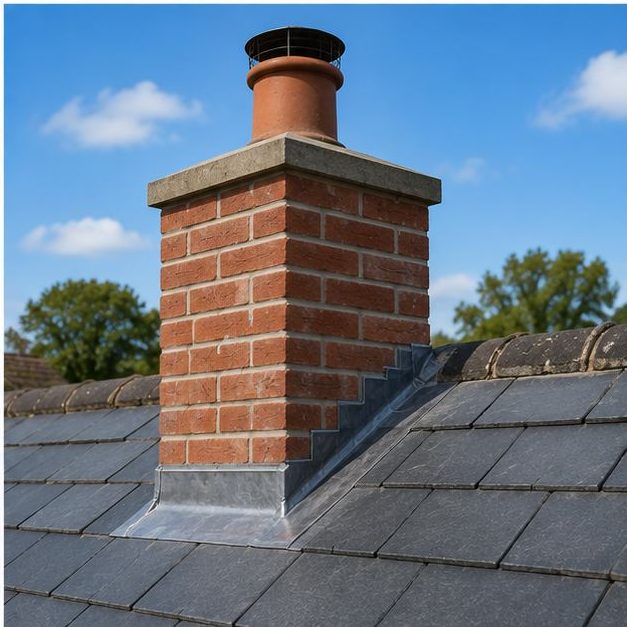
The usual sources are failed pointing that's let water directly into the brickwork, lead flashing or soakers that have corroded or worked loose, cracked flaunching around the base of the pots, or a back gutter that's split and letting water back up rather than diverting it around the stack. Each produces a slightly different pattern of damp, though from inside the house the symptoms can look frustratingly similar regardless of the actual cause, which is why homeowners often struggle to pin it down alone.
A proper inspection means checking the whole stack, not just the parts visible from the garden or the street — all faces of the brickwork, the condition of the flashing where it meets the roof covering, and the state of the pots and flaunching at the top. It's also worth checking inside the loft where the chimney passes through the roof structure, since that's often where the clearest evidence of where water is entering can be found, sometimes well before any damp reaches the ceiling below. Photographing any visible staining or damage before a repair begins can also be useful, since it gives a clear reference point to check against once the work is finished and the next spell of wet weather arrives.
Once the actual source is identified, the fix is usually more straightforward than homeowners expect — repointing, a flashing repair, or new flaunching are far more common solutions than a full rebuild, provided the leak is caught before it's had years to cause secondary damage to timber and brickwork. Guesswork or a quick sealant patch without proper diagnosis tends to mean the leak simply returns within a season, often in slightly worse condition than before.
In the meantime, if a leak is actively coming through during a storm, it's worth placing something to catch the water and, where safe, checking the loft for the point it's entering, since this information can help speed up an accurate diagnosis once an inspection is arranged, rather than waiting until the weather has dried out and any visible clues have disappeared.
If you've got a chimney leak in Westbury-on-Trym that's proving hard to pin down, Brunel Roofing Bristol can carry out a thorough inspection to find the actual cause before recommending a repair, with 24-hour emergency call-out available if the leak needs urgent attention.
Get a Free Quote for Chimney Repairs in Westbury-on-Trym
Every chimney is different — the fastest way to get an accurate answer is a quick chat with our team.