
Loose bricks on a chimney are a different category of problem to cracked mortar or a chipped pot, because they point to something happening beneath the surface rather than just wear on the outer joints. Knowing when loose brickwork has crossed the line into genuinely unsafe territory matters, both for the chimney's long-term repair and, in some cases, for immediate safety.
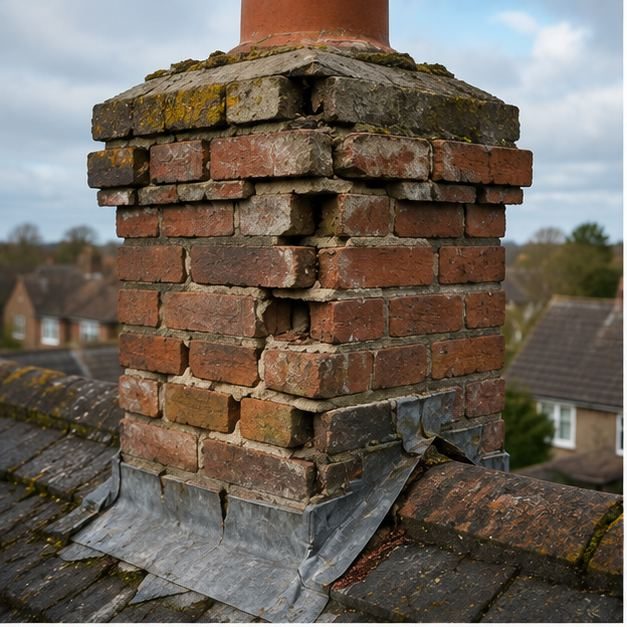
A brick that can be gently rocked or shifted by hand, where mortar has eroded from around it enough to break the bond entirely, indicates water has likely been getting behind the brick face for some time. This is different from a joint that simply looks recessed or worn; it means the physical connection holding that brick in the wall has failed, and depending on its position, that can affect the bricks around it too.
A single loose brick, caught early, is often manageable through localised repair and repointing around it. The concern grows when several bricks in the same area are loose, when loose brickwork is found high up the stack where any falling material would be more dangerous, or when it's accompanied by visible leaning or a stack that seems to move when the surrounding brickwork is tested carefully. These combined signs suggest the issue may extend beyond what's immediately visible.
Older stacks on period properties across Bedminster, many of them built well over a century ago, are more prone to reaching this stage simply through accumulated weathering, particularly where mortar hasn't been renewed in a long time. That doesn't mean older automatically means unsafe, but it does mean it's worth checking sooner rather than assuming a chimney that's stood for decades will simply keep standing indefinitely without maintenance.
The mechanism behind most loose brickwork is freeze-thaw action, where water that's already got into a joint expands as it freezes in cold weather, gradually widening the gap with each cycle over a number of winters. This is why loose bricks so often become noticeable, or noticeably worse, after a particularly cold spell, even though the underlying process has usually been building for a while beforehand. It should go without saying, but it's worth stating plainly: checking a chimney for loose brickwork yourself by climbing onto the roof is not a sensible way to inspect it. A visual check from the ground, from an upstairs window, or with binoculars is enough to spot most warning signs, and anything genuinely uncertain is better resolved by someone with the right access equipment and training to get close to it safely. Wind exposure adds to the risk too, since a stack with loose brickwork high up is more vulnerable during gusty weather than the same issue would be lower down a building, which is part of why loose bricks near the top of a tall chimney tend to be treated with more urgency.
If you've noticed loose bricks on a chimney, particularly anywhere you can see them shift, it's worth getting it looked at promptly rather than waiting. We offer free inspections across Bedminster and, for anything that looks genuinely unstable or dangerous, a 24-hour emergency call-out.
Get a Free Quote for Chimney Repairs in Bedminster
Every chimney is different — the fastest way to get an accurate answer is a quick chat with our team.