
A chimney breast is often where storm damage first makes itself known indoors, even though the actual fault usually lies well above, at roof level. Chimneys are among the tallest, most exposed points on a roof, and the joint between the stack and the surrounding tiles, sealed with flashing, is a common weak spot after strong winds and heavy rain have worked at it.
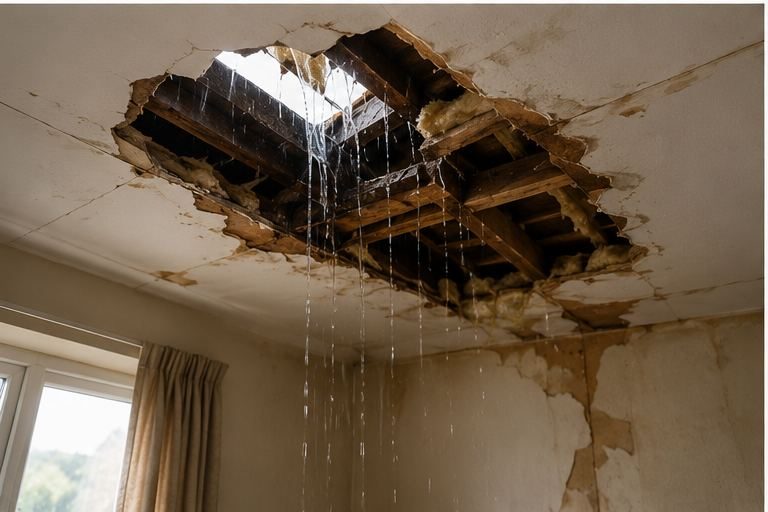
Water getting in around a chimney can travel down inside the flue or along the chimney breast itself before it shows up as a stain on a bedroom ceiling or a patch of damp on an internal wall, sometimes at a level of the house well below the loft. This makes chimney leaks trickier to pin down than a straightforward roof leak, and it usually takes someone up at roof level to identify the actual source properly.
Common causes after a storm include lifted or torn flashing, cracked or slipped mortar joints on the chimney stack itself, and displaced tiles in the area immediately around the chimney's base, known as the apron. Older chimneys, or ones that haven't been checked in some time, are generally more vulnerable to this kind of storm damage than a stack that's been recently repointed and reflashed.
Because water can sit inside a chimney breast for a while before symptoms appear indoors, it's worth treating any damp patch near a chimney as worth investigating even if it seems minor at first. Left unaddressed, ongoing moisture here can affect plaster, timber and, over time, the structural mortar of the stack itself.
It's also worth knowing that a chimney leak can sometimes coincide with, or be mistaken for, a leak from a separate part of the roof nearby, particularly on a property where the chimney sits close to a valley or another junction in the roofline. This is another reason a proper inspection matters, since treating the wrong cause means the actual leak simply continues after what looked like a completed repair. Chimneys that are still in active use for a fire or boiler flue add a further safety consideration, since water ingress here can, in some cases, affect the flue lining, which is worth mentioning to whoever inspects the roof so they can check this specifically as part of the overall chimney assessment for your Kingswood property. A chimney that's no longer connected to a working fireplace or boiler, sometimes left in place purely for its appearance, still needs the same standard of maintenance as one in active use, since its job of keeping the roof watertight around the stack doesn't change simply because it's decorative. It's worth mentioning to whoever inspects a chimney leak whether the flue is still in use, as this can be relevant to how any internal damage is assessed and repaired.
Brunel Roofing Bristol carries out emergency chimney leak repairs for properties across Kingswood, with a 24-hour call-out for urgent cases and a free inspection to confirm the actual cause before any work is agreed, backed by a 15-year guarantee on completed repairs.
Need Emergency Roof Repairs in Kingswood?
Every case is different — the fastest way to get an accurate answer is a quick chat with our team.