
Flashing does a job that is easy to overlook until it fails: sealing the joins around chimneys, roof valleys and abutments where a roof meets a wall, all points where a simple tile or slate covering cannot do the job on its own. For homes across Emersons Green, flashing problems are among the more common emergency call-outs after severe weather, precisely because these junctions are inherently more vulnerable than the flatter, unbroken areas of a roof. A roof can otherwise be in good condition and still develop a leak purely because of a single failed flashing joint.
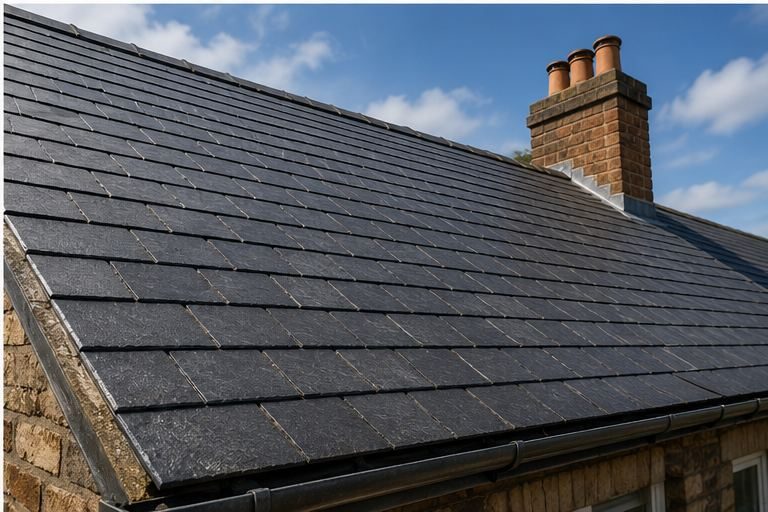
Lead is still the material most commonly used for flashing on both older and newer properties, and while it is durable, it is not indestructible. High winds can work at the edge of a flashing strip over time, gradually lifting it away from the brickwork or roof surface it is meant to be sealed against, until eventually a storm finishes the job and leaves a visible gap or a section that has come away completely. On newer builds, flashing is sometimes formed from alternative materials rather than lead, and these can be similarly vulnerable if not dressed and fixed correctly during installation.
A flashing failure does not always look dramatic. Sometimes it is just a corner that has lifted slightly, barely noticeable unless you know to look for it, but even a small gap is enough to let water track in behind the flashing during heavy rain. This can lead to damp patches appearing on chimney breasts inside the home, or water tracking down inside a wall cavity, well away from where the actual fault lies on the roof, which is why flashing failures are sometimes mistaken for a plumbing issue before the roof itself is properly checked.
When flashing fails during or shortly after a storm, an emergency repair typically starts with making the area weathertight again, either by re-dressing the existing lead back into place if it is otherwise sound, or fitting a temporary seal if a full replacement will need to wait. This stops further water getting in while a permanent repair, matched properly to the surrounding roof, is arranged.
Because flashing sits at a junction between different materials and roof planes, a proper repair needs the surrounding tiles or slates lifted and reset correctly as part of the job, not just the flashing itself patched over. A rushed repair that only addresses the visible strip of lead without checking the tiles around it tends not to last through the next spell of bad weather.
If flashing on your Emersons Green property has come loose or failed after recent storms, Brunel Roofing Bristol provides emergency call-outs to make the roof safe, followed by a proper permanent repair backed by our guarantee on completed work.
Need Emergency Roof Repairs in Emersons Green?
Every case is different — the fastest way to get an accurate answer is a quick chat with our team.