
Lead flashing does one of the least glamorous but most important jobs on a roof: sealing the junctions where two different surfaces meet, around chimneys, at roof valleys, along abutments where a roof meets a wall, and around dormer windows. It's a material chosen precisely because it can be dressed and shaped to form a continuous, flexible seal, but that same flexibility is also what can let it move and fail under real stress.
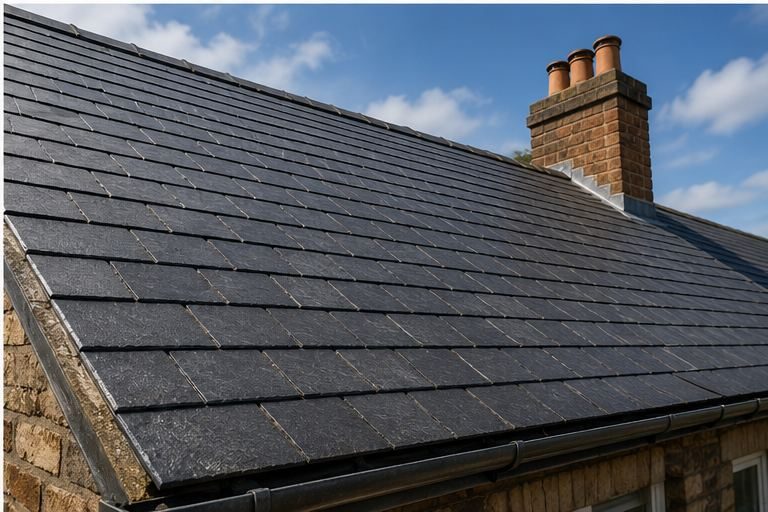
During a storm, flashing typically fails in one of two ways: either an edge that was already slightly loose gets lifted further by wind and torn away from the surface it was sealing, or years of thermal movement gradually work a previously sound seal open even without a single dramatic event being to blame. Once either happens, rain has a direct route into the roof structure at exactly the point it was designed to protect, often with little visible warning beforehand.
Because flashing sits at junctions rather than across an open expanse of roof, damage here can be trickier to spot from the ground than a missing tile, and the resulting leak sometimes appears some distance away indoors, having tracked along a rafter or across the underlay before finding a gap in the ceiling below. This is one of the reasons flashing failures are a common cause of leaks that seem to defy an obvious explanation from indoors.
On Brislington's older terraced housing in particular, chimneys and abutments where a rear extension meets the original roofline are common locations for flashing to be tested hardest, since these junctions were often finished decades ago and may not have been renewed since, even where the surrounding tiles have been replaced more recently as part of general upkeep. Valleys, where two roof slopes meet and channel a concentrated flow of water, are another area where flashing or lead lining does particularly demanding work, and a failure here during heavy rain can let in a surprising volume of water compared with a similar-sized fault on a flatter, less concentrated part of the roof.
Emergency repairs typically involve re-dressing loose flashing back into position where the lead itself is still sound, or replacing sections that have corroded, split, or been damaged beyond a straightforward repair. Because much flashing sits at height around chimneys or valleys, proper access equipment is generally required rather than anything attempted from a ladder, particularly on taller Brislington terraces. Where flashing has failed once, it's worth asking whether nearby sections showing similar age are likely to follow, rather than treating each future failure as an isolated surprise.
If flashing failure has caused a leak on your Brislington property, Brunel Roofing Bristol's 24-hour emergency call-out can secure the area and stop further water ingress, with a full lead flashing repair carried out once the extent of the damage has been properly assessed.
Need Emergency Roof Repairs in Brislington?
Every case is different — the fastest way to get an accurate answer is a quick chat with our team.