
Water coming through a ceiling is one of the more unsettling moments a homeowner can face, but the first few minutes matter more for limiting damage than they do for solving the underlying problem, and it helps to work through a short, sensible sequence rather than panicking or trying to do everything at once. Get a bucket or basin under the drip first, then think about what else needs protecting nearby.
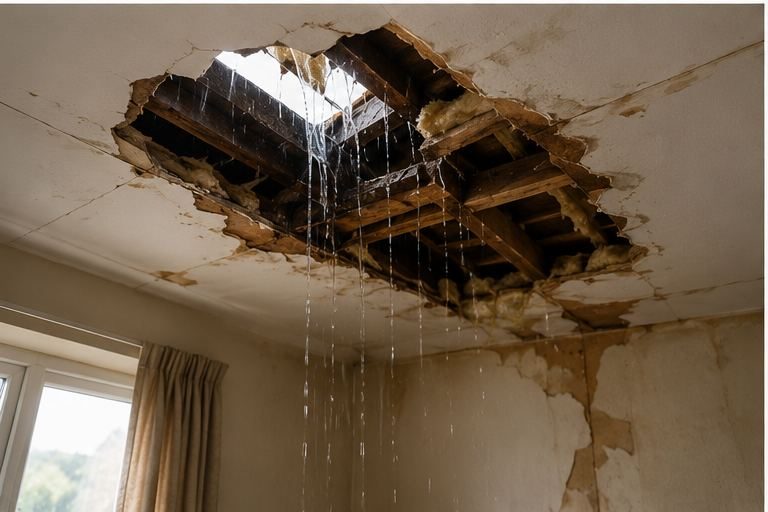
Move anything valuable or easily damaged away from the immediate area, including furniture, rugs, electronics and anything stored in boxes on the floor below, since water tends to spread wider across a ceiling than the visible drip point suggests, tracking along joists before finding its way down in more than one spot at once, sometimes some distance from where you first noticed the problem.
If the ceiling has developed a bulge rather than a clean drip, it usually means water is pooling above the plasterboard, and a controlled release into a bucket, carefully piercing the lowest point of the bulge, can prevent a much larger and messier collapse later. This should only be attempted on a small, manageable bulge, and never if there's any doubt about safety or if the area is anywhere near electrics, in which case it's better to simply wait for help to arrive.
On the subject of electrics, treat any water near light fittings, sockets or the consumer unit with real caution, and isolate the relevant circuit at the fuse board if you're able to do so safely. It's also worth remembering that where the water is coming through is not necessarily where it entered the roof. It can travel some distance along a rafter or across the underlay before finding a gap, which is why a proper inspection matters more than guessing at the source from indoors based on where the ceiling is wet.
Photographing the damage as it appears, both inside and any visible signs on the roof from outside, is useful groundwork for whoever attends, and helps build a clear record of how things looked when the problem started, which can be useful later on, whether for your own peace of mind or for any conversation with an insurer. Once the immediate situation is under control, try to keep the room ventilated where possible, since a damp ceiling that's left stagnant for too long is more likely to develop mould, adding a second problem on top of the original leak. Keep a note of roughly when the leak started and how it's changed since, as this kind of detail helps whoever attends understand the pattern of the problem more quickly.
For homes across Brentry dealing with an active leak, Brunel Roofing Bristol operates a 24-hour emergency call-out to get the roof weathertight quickly, with temporary patching or tarping used to stop further water getting in while a permanent repair is arranged.
Need Emergency Roof Repairs in Brentry?
Every case is different — the fastest way to get an accurate answer is a quick chat with our team.