
Lead has been used in roofing for centuries because it's so durable, yet it isn't invulnerable, and storms can damage it in ways that aren't always obvious until a leak develops. For homeowners in Bishopston with older properties, many of which rely on lead flashing around chimneys, in valleys, and at abutments, understanding how storms cause this damage helps explain why flashing problems crop up so often after bad weather passes through. It's a material that rewards careful, patient fitting, which is exactly what makes storm damage to it so disruptive when it does occur.
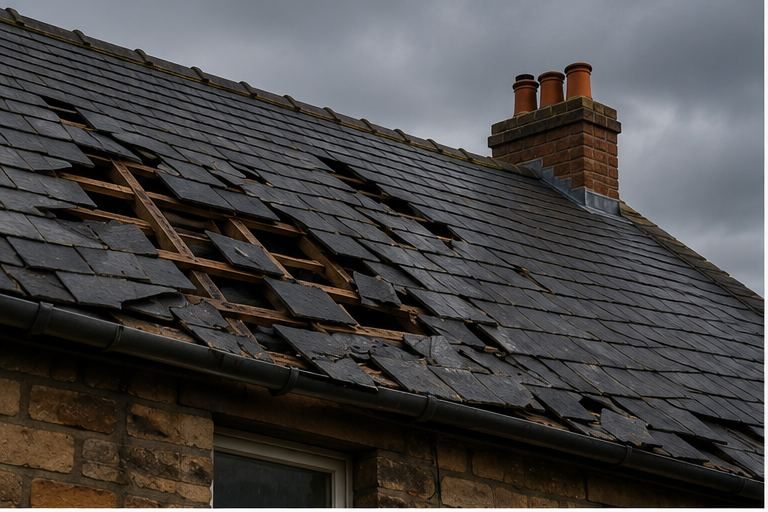
High winds can physically lift the edges of lead flashing, particularly where it's dressed against brickwork or tiles, gradually working it loose over repeated gusts even if it doesn't tear away completely in one event. Once lifted even slightly, the flashing no longer sits as tightly as it should, creating a small gap that heavy rain, especially driving rain during a storm, can exploit and gradually widen over time. This gradual process means the first sign of trouble is often a small, easily missed leak rather than an obvious, dramatic failure.
Falling debris, such as broken branches or displaced tiles from higher up the roof, can also dent, crease, or puncture lead flashing on impact, and because lead is a relatively soft, malleable material, this kind of damage doesn't always look dramatic even when it's enough to compromise the flashing's ability to keep water out effectively. A dent that looks purely cosmetic to the eye can, in practice, be creating a channel that funnels water exactly where it shouldn't go.
Older lead flashing is more vulnerable generally, since decades of thermal movement, expanding and contracting with temperature changes, combined with general weathering, can leave it thinner or more brittle than when it was originally fitted, meaning a storm may simply be the event that finally causes an already-weakened section to fail after years of gradual decline. This is one of the reasons a roof that has coped with previous storms without issue can still develop a leak during a storm that isn't, on paper, particularly severe.
Because damaged flashing often doesn't look obviously wrong from ground level, and because the resulting leak can appear some distance from the actual point of failure, it's genuinely difficult to self-diagnose this kind of problem accurately. A professional inspection focused on the flashing itself, rather than just a general glance at the tiles, is usually needed to identify exactly what's happened. A roofer familiar with older Bishopston properties will generally know the likely weak points to check first, based on the age and style of the roof.
If your Bishopston property has lead flashing that hasn't been checked recently, particularly after a storm, it's worth having it looked at before a leak develops rather than after. Prevention here is considerably simpler, and cheaper, than dealing with the consequences of a leak that's already taken hold. Brunel Roofing Bristol provides free inspections and flashing repairs backed by a 15-year guarantee.
Need Emergency Roof Repairs in Bishopston?
Every case is different — the fastest way to get an accurate answer is a quick chat with our team.