
Tiles and ridge tiles fail for slightly different reasons, even though a storm is usually the trigger for both. Ordinary roof tiles typically lose their grip when wind gets underneath an edge and lifts it beyond what the fixing or overlap can withstand, while ridge tiles, sitting along the very top of the roof and bedded onto mortar or a dry-fix system, tend to fail when that bedding cracks or degrades and the tile is no longer securely held in place, sometimes long before it actually comes loose.
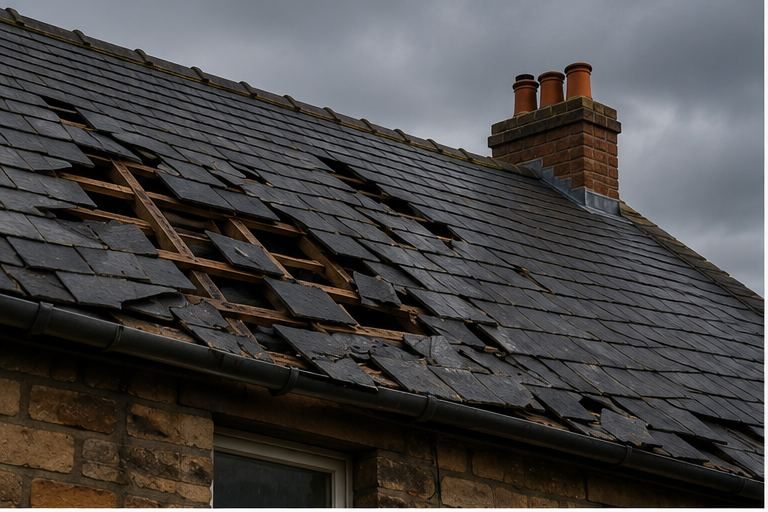
For homes across Nailsea, both problems tend to become more likely as a roof ages. Mortar used to bed ridge tiles naturally weathers over time, developing hairline cracks that widen with each freeze-thaw cycle or bout of severe weather, until a storm finally works a tile loose enough to shift or fall. Ordinary tiles, meanwhile, can simply wear at their fixing points or nibs over many years, making them more susceptible to being lifted by wind even in a storm that a newer roof would have shrugged off.
A missing ridge tile is worth taking seriously, since the ridge line is a critical junction where two roof slopes meet and rely on that capping to keep water out. A gap here can let rain in directly at the highest point of the roof, sometimes affecting a wider area of loft space than a single missing tile lower down the slope would. Displaced ridge tiles are also a falling hazard, particularly on a windy day.
Because the ridge sits at the top of the roof, it is also one of the hardest areas to inspect properly from ground level, and a slightly displaced tile that has not yet fallen can be almost impossible to spot from the garden. This is one of the reasons a post-storm check that actually gets close to the roof, rather than relying on a view from below, is worthwhile for Nailsea homeowners even when nothing looks obviously wrong. Binoculars or a phone camera zoomed in from the garden can sometimes give a rough clue, but they are no substitute for someone actually examining the ridge and its bedding up close.
Repairing missing tiles is usually straightforward, matching replacements to the existing roof and checking neighbouring tiles for similar wear. Ridge repairs depend on the existing system: where mortar bedding has failed more generally along the ridge, rebedding the full run, or in some cases upgrading to a modern dry-fix ridge system, often makes more sense than patching individual tiles repeatedly.
If you have noticed missing tiles or a ridge that looks uneven or gapped after a storm in Nailsea, it is worth having it assessed rather than waiting for further tiles to follow. We offer free inspections and our completed repair work is covered by a 15-year guarantee, so you can be sure the fix will hold through many storms to come.
Need Emergency Roof Repairs in Nailsea?
Every case is different — the fastest way to get an accurate answer is a quick chat with our team.