
Westbury-on-Trym's roofs are a genuine mix of slate and tile, reflecting the area's varied building periods, and each material responds a little differently when a storm rolls through. Understanding which type of roof you have can help make sense of the kind of damage you might be looking at after a bad spell of weather, and what a subsequent repair is likely to involve.
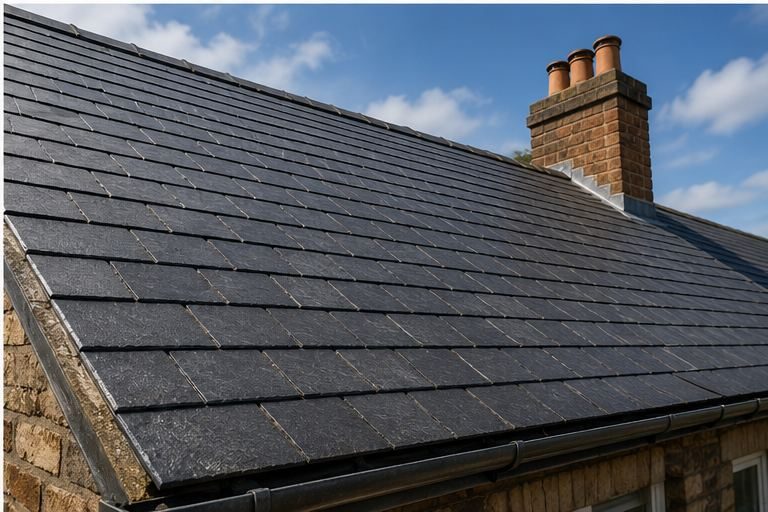
Slate is naturally durable but can crack under the impact of flying debris, or slip out of position when the nails or fixings holding it in place corrode or work loose over time. Because slates overlap in a fairly tight pattern, a single displaced slate can sometimes go unnoticed from the ground while still leaving a real gap for water to get through, particularly during driving rain rather than a gentle shower, when wind forces water sideways under the overlap. Corroded slate nails in particular are a common, easily missed cause of gradual slate loss on older roofs, and they are rarely visible without a close inspection of the roof surface itself.
Tiled roofs tend to fail differently, with wind more commonly lifting tiles at their lower edge and either dislodging them entirely or cracking them against neighbouring tiles as they move. Ridge and hip tiles, which sit along the top and angled edges of the roof, are also worth checking after a storm, since the mortar bedding them in place can crack or crumble under sustained wind pressure, loosening the tiles themselves and creating an additional point of weakness that is not always obvious from below.
Whichever material your particular roof happens to use, the underlying risk after storm damage is essentially the same: water finding its way in through a gap that did not exist before, then tracking along the roof structure before it shows up as a stain or damp patch somewhere inside the property. This is why a leak indoors is not always a reliable guide to exactly where the damage is on the roof above, and why a visual check from the garden is rarely enough on its own.
Repairing slate requires sourcing matching or compatible replacement slates and refixing them correctly, while tile repairs are usually more about replacing individual units and checking the surrounding area for further loosening. Either way, a proper inspection after a storm is the only reliable way to know what has actually been affected on a roof across Westbury-on-Trym, rather than guessing based on what can be seen from ground level.
If your slate or tiled roof has been through recent severe weather, it is worth having it checked before the next downpour tests it further. Contact Brunel Roofing Bristol for a free, no-obligation inspection and quote. Whether your roof is finished in slate or tile, catching storm damage early tends to make the eventual repair simpler and less disruptive than leaving it to worsen over successive spells of weather.
Need Emergency Roof Repairs in Westbury-on-Trym?
Every case is different — the fastest way to get an accurate answer is a quick chat with our team.