
Chimneys are structurally separate from the roof around them, built up from ground level rather than sitting on the roof structure itself, but that doesn't make them any less vulnerable during a storm. In fact, because they stand proud of the roofline and take the full force of the wind, chimneys on properties across Barton Hill are often among the first things to show storm damage, sometimes well before the surrounding tiles show any sign of trouble. A chimney that's visibly leaning, even slightly, after a storm should never be dismissed as a purely cosmetic issue.
The most common problems are damaged or displaced chimney pots, cracked or loose brickwork or rendering on the stack itself, and lifted or damaged lead flashing at the point where the chimney meets the roof. Of these, flashing damage is particularly significant, since it's specifically there to keep water out of what would otherwise be a vulnerable joint between two very different structures moving slightly independently of one another over time. Because the chimney and the main roof structure aren't built as a single rigid unit, flashing is specifically designed to accommodate this movement, and it's usually the first thing to give way in a storm.
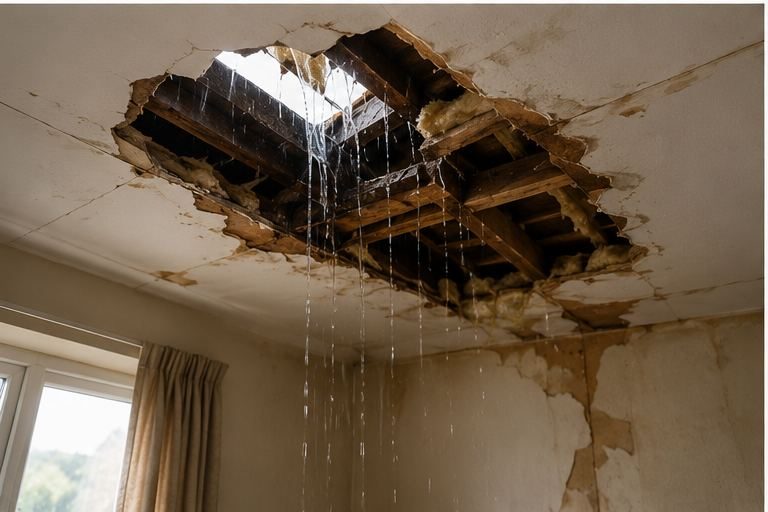
A damaged chimney can cause problems in more than one place. Water getting past failed flashing will typically enter the roof space nearby, while a cracked or loose pot can, in more serious cases, become a falling hazard, and deteriorating brickwork on the stack itself is a structural concern that tends to get worse, not better, if left unaddressed through further weather over the following months. In older properties, deteriorating mortar between bricks on the stack can also allow water to penetrate the chimney breast itself, sometimes causing damp to appear inside the property.
Because chimney work involves working at height on a narrow, often steeply-pitched section of roof, this isn't a repair suited to DIY, even for homeowners comfortable with general property maintenance. Scaffolding or appropriate access equipment is usually needed to inspect and repair a chimney safely, particularly on Barton Hill's taller period properties where the stack sits well above the main roofline. Attempting to inspect a chimney from a loft hatch or an upstairs window rarely gives an accurate picture of its actual condition.
An inspection following storm damage to a chimney should cover the pot, the stack itself, the flashing, and the surrounding roof tiles or slates, since problems in one area often affect another. A roofer will be able to advise whether the issue is a straightforward flashing repair or something more involved, such as re-pointing or partial rebuilding of the stack.
If your chimney has taken visible damage in a recent storm, or if you've noticed a new leak near where it meets the roof, it's worth having both checked together. Brunel Roofing Bristol provides free inspections across Barton Hill and a 24-hour emergency call-out for urgent chimney and roof repairs.
Need Emergency Roof Repairs in Barton Hill?
Every case is different — the fastest way to get an accurate answer is a quick chat with our team.