
Ridge tiles sit along the very apex of the roof, and that position makes them one of the more exposed features a roof has — taking wind pressure from every direction rather than the relatively predictable load a roof slope experiences. On many Redfield properties, particularly older terraces, ridge tiles are held in place with a bed of mortar that, over years of weathering, gradually loses its grip. A serious storm is often what finally dislodges tiles that mortar has been struggling to hold for some time. Because the ridge runs the full length of the roof, damage can appear at any point along it, and it's not unusual for a storm to affect more than one section simultaneously if the mortar throughout was already in similar condition.
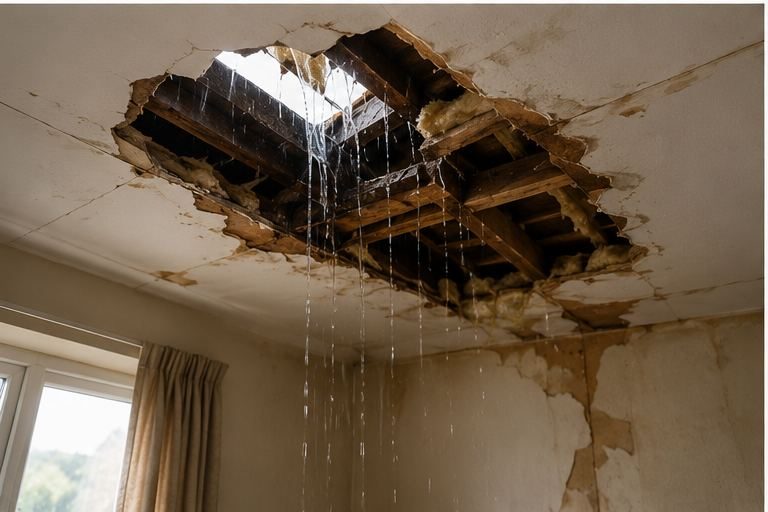
Damage here can range from a single loose tile that rattles audibly in wind, to sections of ridge that have come away entirely during a severe gust. Loose ridge tiles are a particular hazard in themselves — not only do they let water in beneath them, but a tile that shifts significantly can become a falling hazard, especially on taller properties overlooking a street or path. A rattling or visibly moving ridge tile is worth treating as an early warning sign rather than something to leave until it eventually comes loose completely.
Once mortar has failed at one point along the ridge, it's common for adjacent sections to be close behind too, since the same weathering and age affecting one section has generally been affecting the entire ridge line over time. This is why ridge repairs often extend a little beyond the single obviously damaged tile, once a roofer has had a proper look at the surrounding sections.
There are two main approaches to fixing storm-damaged ridge tiles: re-bedding them in fresh mortar, which restores a traditional finish, or fitting a dry ridge system, which uses mechanical fixings rather than mortar and tends to be more resilient against future wind damage. Which approach makes sense depends on the property, the extent of existing damage, and the homeowner's preference.
Because ridge work is at the very top of the roof, access is a key part of planning any repair — scaffolding or appropriate access equipment is usually needed to carry out the work safely, which is worth factoring into timing expectations rather than assuming it's a quick fix. On terraced Redfield streets with limited space to the front or rear, arranging this access sometimes takes a little longer than on a detached property with open ground around it.
Brunel Roofing Bristol repairs storm-damaged ridge tiles across Redfield, with free inspections to assess the full extent of the damage and a 15-year guarantee on completed repair work. We'll always explain which approach we'd recommend for your specific roof and why, so you can make an informed decision before any work begins on your home.
Need Emergency Roof Repairs in Redfield?
Every case is different — the fastest way to get an accurate answer is a quick chat with our team.