
Chimney flashing has one job, keeping water out of the junction between a chimney stack and the surrounding roof covering, and it is a job that becomes noticeably harder during high wind. Across Cotham, where many properties have chimney stacks dating back to the original Victorian build, wind damage to this flashing is one of the more frequent causes of a storm-related leak, and one of the more straightforward to resolve once correctly identified.
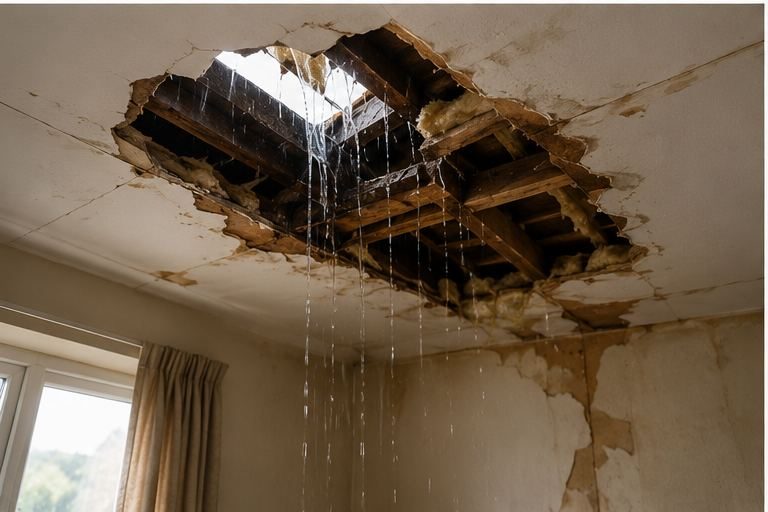
The mechanism is usually fairly simple. Flashing that has begun to work loose from age, or that was not perfectly fitted to begin with, can be lifted slightly by strong gusts, and once even a small gap opens up, wind-driven rain is pushed underneath rather than running off the top as intended. This is why chimney leaks so often coincide with genuinely windy weather rather than simply heavy rain on its own, since it is the combination of the two that tends to defeat flashing that is otherwise holding up reasonably well. A quick visual check from ground level, looking for any obvious gap or a strip of lead that no longer sits flush against the brickwork, can sometimes catch the problem before the next storm does.
Cracked or split lead flashing is another possibility, particularly where the material has become brittle with age or has been subject to repeated thermal movement over many years. A split that starts small tends not to stay that way, gradually widening with each subsequent storm until it is properly repaired. Because this kind of gradual deterioration is difficult to spot from a distance, many homeowners only become aware of it once a leak has already started, by which point the damage is generally more extensive than it would have been if caught earlier.
Chimney flashing problems are not always confined to leaks appearing directly beneath the chimney. Water entering at this point can track down inside the chimney stack or along adjoining roof timbers before showing up as a damp patch some distance away, which is worth bearing in mind if a leak seems to appear in an unexpected location after a storm, rather than assuming the chimney can be ruled out simply because the damp patch sits elsewhere.
Repairing wind-damaged flashing usually involves lifting and re-dressing the affected lead, or replacing it where age or damage means a patch repair would not hold reliably, along with a check of the surrounding pointing and brickwork, since chimney issues on older properties often involve more than a single point of failure. Getting all of this checked in one visit generally saves a second call-out later for a related issue that was missed the first time round.
If you suspect wind has damaged the chimney flashing on a Cotham property, Brunel Roofing Bristol can carry out a free inspection to confirm the cause and offers emergency leadwork repairs where the situation requires prompt attention, with a 24-hour call-out available for anything more urgent.
Need Emergency Roof Repairs in Cotham?
Every case is different — the fastest way to get an accurate answer is a quick chat with our team.