
Property styles around Clifton reflect the area's development over many years, which means the roofing material that suits one home may look entirely wrong on another just a few streets away. Grand Georgian terraces, imposing Victorian villas and later infill housing all sit within close proximity of one another on Clifton's hillside streets, so choosing a covering that complements the specific property, rather than reaching for a generic default, makes a genuine difference to how the finished roof looks once the job is done.
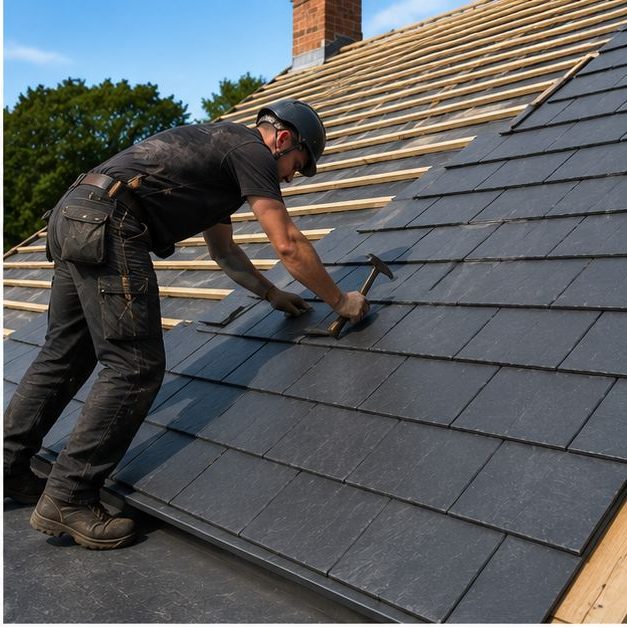
For the classic Georgian and Regency-era terraces that Clifton is so well known for, natural slate is usually the material that best reflects the original design intent. Its fine texture, subtle colour variation and slim, elegant profile were part of what gave these roofs their refined appearance in the first place, and a modern equivalent that mimics those qualities closely will sit far more comfortably on the roofline than a heavier, more uniform alternative that draws the eye for the wrong reasons.
Where a home dates from the Victorian or Edwardian period, clay tiles were more commonly used, often finished with decorative ridge details, patterned banding or ornamental finials on larger detached and semi-detached properties. Concrete tiles have their place too, particularly on the twentieth-century housing found on the fringes of Clifton, and can offer a practical, cost-effective option where matching an ornate historic finish isn't the main priority for the homeowner concerned.
Beyond simple period accuracy, it's worth thinking carefully about how a new roof will read from street level and from neighbouring gardens, since Clifton's elevated, hillside setting means roofs here are often visible from a considerable distance and even from across the gorge in places. Colour, texture and the way a material weathers over the years all affect how well a new roof blends into its surroundings, so samples and photographs of similar properties nearby can be genuinely useful when making a final decision on specification.
It's also worth considering how the new material will perform over time rather than focusing purely on initial appearance, since a roof that looks right on day one but weathers unevenly, fades badly or requires frequent maintenance can end up looking mismatched within a few years. Thinking about long-term colour stability and durability alongside the visual match helps protect the investment you're making in the property.
Cost naturally plays a part in any material decision too, and it's worth being realistic about the trade-offs involved rather than assuming the cheapest option will always represent the best value. A slightly higher initial outlay on a material that genuinely suits a Clifton property can pay off through fewer future repairs, a longer service life and a stronger resale position, particularly on a street where kerb appeal and architectural consistency carry real weight with prospective buyers.
If you're unsure which material would suit your home, Brunel Roofing Bristol can talk through the options based on your property's age and setting, helping you choose a covering that looks right and performs well for years to come.
Get a Free Quote for New Roof Installations in Clifton
Every roof is different — the fastest way to get an accurate answer is a quick chat with our team.