
Eaves ventilation is often the least visible part of a roof's ventilation system, tucked away under the roofline where most people never think to look, yet it plays a crucial role in how air moves through the loft space. On a new roof in Hanham, eaves ventilation typically works alongside a higher-level exhaust point, such as a ridge vent or tile vents, to create a steady flow of air from the lowest part of the roof to the highest.
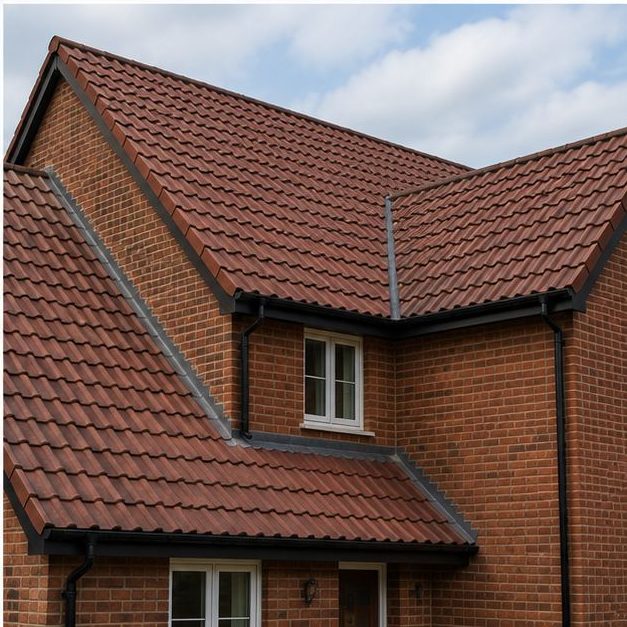
The principle is straightforward. Cooler, drier air is drawn in through vents fitted at the eaves, usually built into the soffit board or fitted as a continuous strip beneath the roof covering, and this air then travels up through the void above the insulation before escaping through vents nearer the ridge. This constant, gentle movement of air is what carries moisture out of the loft before it has a chance to settle on timbers or the underside of the roof covering, whatever the weather is doing outside. Even a relatively gentle flow of air, moving continuously day and night, is usually enough to keep humidity in the loft at a manageable level.
On many of Hanham's older properties, original eaves detailing wasn't designed with this kind of deliberate airflow in mind, so a re-roof is often the ideal opportunity to introduce proper eaves ventilation without altering the external appearance of the house. Continuous strip vents fitted discreetly along the soffit can provide a substantial intake of air while remaining virtually invisible from the street, which matters on a road where the roofline is part of the property's traditional character. Over-fascia vents, fitted at the point where the roof covering meets the fascia board, offer a similar result and can be a useful alternative where the soffit itself isn't well suited to strip vents.
It's also worth noting that eaves ventilation needs a clear path for air to actually reach it once it's fitted. Insulation that's been pushed too far into the eaves, or debris and old felt left in the void, can block the airflow even when the vents themselves are correctly installed. Part of doing this properly during a re-roof is making sure the route from the eaves opening through to the main loft space is kept clear, which is something that's far easier to check and correct while the roof is stripped back than afterwards. Small proprietary rafter trays are often used at this point specifically to hold insulation back from the eaves gap, keeping the airway open permanently rather than relying on it staying clear by chance.
The volume of air an eaves system can supply also needs to be roughly matched to whatever exhaust ventilation is fitted higher up the roof, since a generous outlet at the ridge achieves little if the intake at the eaves is too restricted to feed it. Getting this balance right is part of what separates a ventilation system that looks correct from one that actually performs as intended once the roof is finished.
Getting eaves ventilation right takes a bit of care during installation, and it's a detail Brunel Roofing Bristol pays close attention to on every re-roof, ensuring homes across Hanham end up with a system that actually moves air rather than one that just looks the part on paper.
Get a Free Quote for New Roof Installations in Hanham
Every roof is different — the fastest way to get an accurate answer is a quick chat with our team.