
Every tile or slate on a pitched roof plays a small part in moving rainwater downhill, but it is the last few centimetres at the eaves that determine whether that water actually ends up in the gutter or somewhere it shouldn't. On a well-installed roof, this happens almost invisibly, which is exactly the point, but it depends on several details being set out correctly during installation.
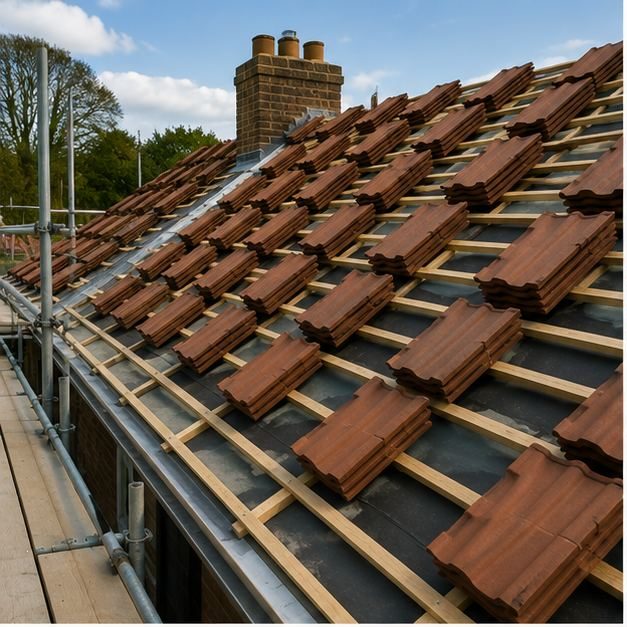
Water travels down the surface of each tile and, where tiles overlap, briefly under the tile above before continuing downward. By the time it reaches the eaves course, the volume of water has built up considerably, having collected the runoff from the entire roof slope above it. The eaves tile or slate needs to overhang the fascia and gutter by a set amount so that this concentrated flow drips clear of the fascia board and lands inside the gutter channel rather than running down its outer face or behind it, and this overhang varies slightly depending on the tile profile being used.
Underneath the visible tiles, the eaves tray and underlay are doing a similar job for any water that gets past the roof covering itself, whether through wind-driven rain, minor gaps, or simply moisture that finds its way beneath the tiles during heavy weather. The tray channels this water forward and down into the gutter as well, so both the visible and hidden layers of the roof are working together to the same end point, providing a backup route that keeps the timber below dry even in poor weather.
The pitch of the roof also plays a part in how quickly and forcefully water reaches the eaves. Steeper roofs shed water faster and with more force, which places extra demand on the eaves detail to cope with a sudden flow rather than a gentle trickle, particularly during heavy downpours. This is one of several reasons why the eaves specification is considered alongside the roof's pitch and geometry rather than treated as a generic, one-size-fits-all detail.
Because Kingsweston sits in an exposed, semi-rural setting near open parkland, roofs here can see a good amount of wind-driven rain, which makes this detail more important than it might be on a more sheltered street. A new roof installation gives us the chance to set the tile overhang, eaves tray and gutter position correctly as one system, rather than relying on whatever alignment happened to be left behind by a previous repair.
If you notice water dripping behind your gutter rather than into it, particularly during heavy rain, it is a sign this detail may not be working as it should. Brunel Roofing Bristol can inspect the eaves on your Kingsweston property and correct the alignment as part of a new roof installation, so rainwater ends up exactly where it is meant to.
Get a Free Quote for New Roof Installations in Kingsweston
Every roof is different — the fastest way to get an accurate answer is a quick chat with our team.