
Not every roofing material can be used on every roof, and pitch is one of the main reasons why. The angle of a roof affects how quickly water runs off it, and every tile, slate or sheet material has a manufacturer-stated minimum pitch below which it simply won't shed water reliably. Getting this wrong leads to water tracking back under the covering, particularly in driving rain, which is exactly the kind of weather Bishopsworth sees plenty of through the year, and it's a mistake that often isn't obvious until the first bad storm exposes it, sometimes years after a roof was originally covered and long after the original installer has moved on to other work.
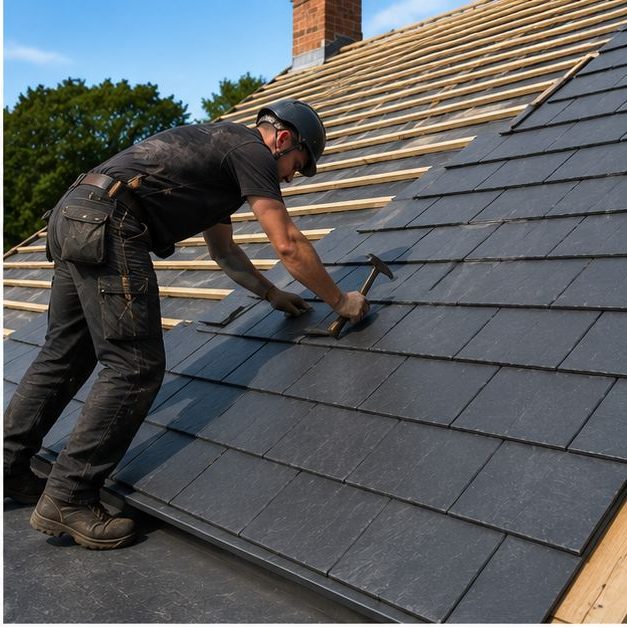
Older properties in and around Bishopsworth often have steeper roof pitches, a legacy of traditional slate roofing where a steep angle helped the thin, overlapping slates perform well even in exposed, wind-driven conditions. Steeper pitches generally give you more flexibility, as they can accommodate slate, most concrete or clay tile profiles, and lighter modern coverings without difficulty. Extensions, dormers or later additions to a property, however, sometimes introduce shallower pitches that need a different approach entirely, and it's not unusual for these later additions to have been built to a lower angle purely to fit under existing eaves or planning constraints, which can leave a mismatch between what the roof needs and what was actually installed at the time, storing up problems for whoever owns the property later. A flat or near-flat dormer roof, for example, needs an entirely different membrane system to the pitched slates on the rest of the house.
On lower-pitched sections, standard interlocking tiles may not be suitable, and you'd typically look at tiles specifically rated for low pitch, or in some cases a different covering system altogether, sometimes paired with additional underlay specification to give extra protection against wind-driven rain finding its way under the tiles. This is a detail that's easy to miss if a roof is simply replaced like-for-like without checking whether the original covering was ever correctly matched to the pitch in the first place, which does happen more often than homeowners might expect, particularly on extensions added some years after the main house was built by a previous owner working to a tighter budget.
It's also worth remembering that pitch can vary across a single roof, especially on homes that have been extended over the years, which is common in a mixed, established area like Bishopsworth. A hip roof, a catslide extension roof, or a dormer can each have a different angle to the main roof plane, meaning a single property might genuinely need more than one type of covering, or careful detailing where pitches meet, such as at the junction between a main roof and a shallower rear extension, where valleys and abutments need particular care to stay watertight over the long term rather than just looking neat when first installed. Getting this wrong at the design stage is one of the more common causes of leaks that only ever show up around the join between two roof sections.
If you're unsure whether your current roof covering is right for its pitch, or you're planning a replacement and want it specified correctly from the outset, Brunel Roofing Bristol can assess every plane of your roof in Bishopsworth and recommend materials that will perform properly for years to come.
Get a Free Quote for New Roof Installations in Bishopsworth
Every roof is different — the fastest way to get an accurate answer is a quick chat with our team.