
The verge is the sloped edge of a roof running from eaves to ridge along a gable, and how it is finished has a real bearing on both weatherproofing and appearance. On the larger detached and semi-detached houses found throughout Sneyd Park, many of them Edwardian or inter-war in origin, the verge is often one of the most visible parts of the roof from the street or from a neighbouring garden, so getting the finish right matters as much for kerb appeal as for keeping water out of the structure beneath.
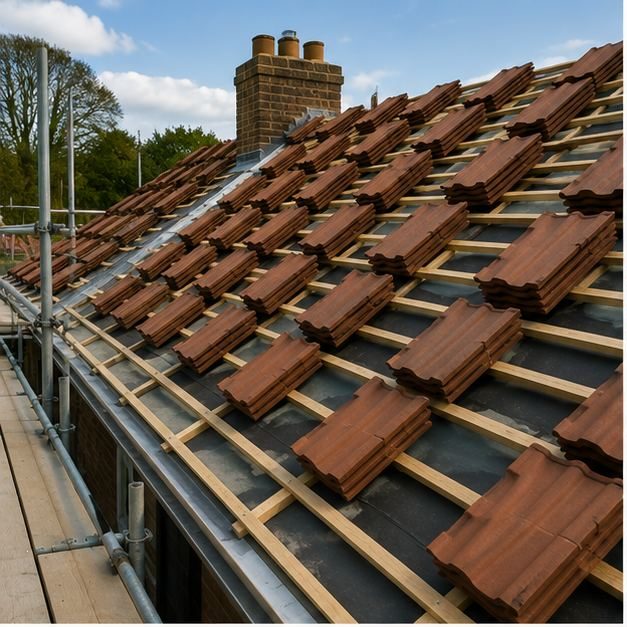
Traditionally, verges were finished by bedding the undercloak and the edge tiles or slates in a sand and cement mortar mix, which was then pointed to give a neat, continuous line along the gable. This approach has been used for generations and still suits many of the older properties in the area, particularly where a period appearance needs to be preserved and where matching existing detailing on a semi-detached pair, or on an adjoining wing of the same house, is important to the overall look. The tile overhang at the verge is usually set to a consistent width along the whole run, since even a small variation from one course to the next becomes noticeable once the roof is complete.
On other roofs, especially where a full re-roof is taking place, we now often specify a dry verge system using purpose-made uPVC or GRP units that clip onto the tiles without any mortar at all. These units are mechanically fixed rather than bonded, so they are far less prone to the cracking and displacement that mortar can suffer over time, and they can be a sensible upgrade even on a traditional-looking roof where the homeowner wants a more durable long-term result without sacrificing appearance.
Whichever method is used, the process begins before a single tile is laid, with an undercloak or verge batten fitted to support the edge and give the tiler a consistent line to work to. Getting this base right is what allows the finished verge to run straight and true along the full length of the gable, rather than drifting slightly out of line as the roof progresses from eaves to ridge, a detail that is far easier to notice on a long, unbroken slope than on a shorter one.
Deciding which approach to use depends on the roof's pitch, tile or slate profile, age of the property and how the finished edge will sit against the wider roofscape. On the generous plots typical of Sneyd Park, where roofs are often seen from some distance across a garden or driveway, Brunel Roofing Bristol pays close attention to getting these lines straight and consistent, since a poorly finished verge stands out on a well-kept home. We also factor in how the verge will meet the ridge and eaves detailing at each end, since a mismatch at these junctions is often where problems first appear on an otherwise well-finished roof.
If you are planning a new roof and want the verges finished to a standard that suits the character of your property, we would be glad to visit, assess the existing roof and talk through the options available before providing a clear, no-obligation quote for the work.
Get a Free Quote for New Roof Installations in Sneyd Park
Every roof is different — the fastest way to get an accurate answer is a quick chat with our team.