
Safety during a roof replacement works in two directions: protecting the people carrying out the work, and protecting the household living alongside it. In Westbury-on-Trym, where many homes sit close to footpaths, driveways and neighbouring gardens, both sides of that equation need proper thought before any tiles are lifted off, and both influence how the scaffold is ultimately designed, positioned and used throughout the project. A roof replacement can take place over a number of days, so the arrangements put in place at the very start need to hold up reliably for the whole of that period, not just the first morning.
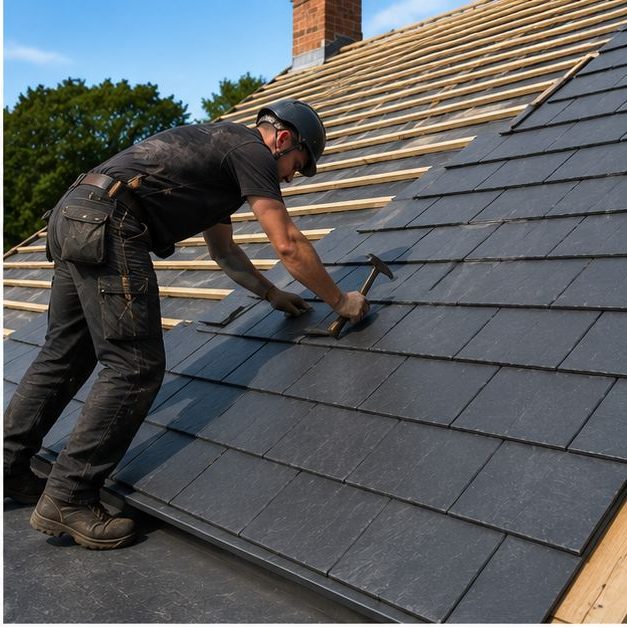
For the roofing team, scaffolding with secure guard rails, toe boards and stable working platforms reduces the risk of falls, which remain one of the most serious hazards in any roofing trade. A well-built scaffold also means less time spent balancing on ladders to move materials, which lowers the chance of slips, dropped tools or damaged tiles during the installation itself. Being able to stand securely at every point around a chimney stack, valley or awkward hip also allows more careful, methodical work than trying to reach awkward angles from a ladder propped against a gutter.
For the homeowner and their family, the same scaffold structure, combined with debris netting and edge protection, stops loose material, dust or the occasional dropped fixing from reaching ground level where people walk, children play or cars are parked. This is especially relevant on the narrower plots found in parts of Westbury-on-Trym, where scaffolding may sit closer to paths and doorways than on a larger detached property, and where a family with young children or pets using the garden daily needs real confidence that the site is properly contained and free of hazards at ground level.
Brunel Roofing Bristol treats access and safety as something to plan before work starts, not something worked out on site. That includes agreeing where scaffold ladders and access points will be positioned so they do not interfere with daily household routines such as getting the car out or reaching the front door, making sure gates or locking devices restrict access to the scaffold outside working hours so it cannot be climbed by anyone uninvited, and ensuring the structure is inspected regularly throughout the project rather than only at the start.
Scaffold sheeting or protective netting draped across the working face of the roof adds a further layer of protection, catching wind-blown debris before it reaches ground level and giving the household a visible sign that the site is being managed carefully rather than left open and exposed. It also helps keep dust away from washing lines, patio furniture and parked cars during the noisier, messier early stages of stripping off the old roof covering.
Getting this right protects everyone involved and helps the installation run smoothly from start to finish, without the site ever feeling like a source of worry for the household. If you would like to know more about how site safety would be managed at your Westbury-on-Trym property, Brunel Roofing Bristol is happy to talk through the details and provide a quote.
Get a Free Quote for New Roof Installations in Westbury-on-Trym
Every roof is different — the fastest way to get an accurate answer is a quick chat with our team.