
Because Henleaze is a desirable north Bristol suburb known for spacious inter-war houses, mature streets and well-kept family homes, it is easy to assume that a roof which still looks reasonable from the pavement is still doing its job properly underneath. In reality, roof coverings age quietly for years before problems become visible, and by the time staining appears on a bedroom ceiling the underlying materials may already be well past their best. Knowing whether a roof has genuinely reached the end of its life is rarely about spotting one dramatic fault; it is usually a combination of smaller clues building up over time.
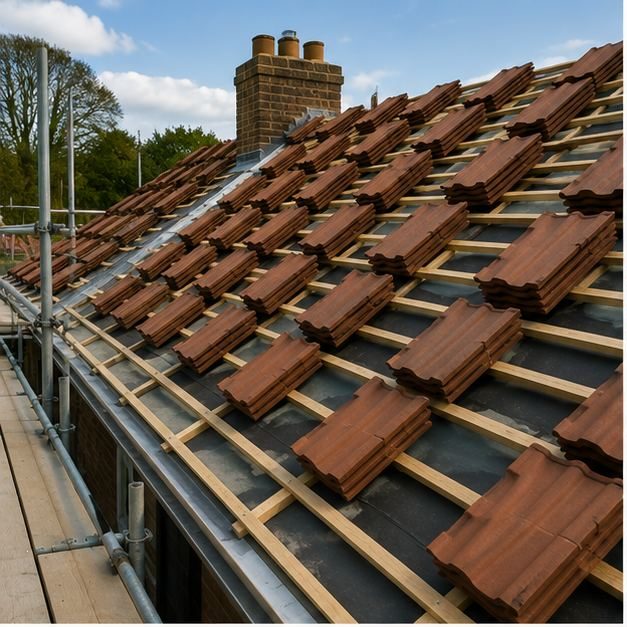
Age is the first and most useful indicator. Many of Henleaze's inter-war properties were originally finished in clay tile or natural slate, materials that can last well over half a century when properly maintained, while later extensions and rebuilds are more likely to carry concrete tiles with a shorter practical lifespan, often somewhere between thirty and fifty years. If you know or can estimate roughly when your roof was last fully replaced, that figure alone gives a strong starting point for judging how much useful life is likely to remain. Original documents, old planning records or simply asking a long-standing neighbour who remembers work being done can all help fill in that history when your own paperwork has gone missing.
Beyond age, the way a roof behaves under ordinary weather tells its own story. A roof nearing the end of its life tends to lose its ability to shed water cleanly, so heavy rain that once ran straight off now finds its way under tiles, along felt that has become brittle, or through nail holes that have widened over the decades. If repairs that once solved a leak for good now only hold for a season before the same area lets water through again, that is a sign the covering itself, rather than any single component, is failing. Underlay and membrane in particular have a habit of perishing quietly, so that the tiles above can still look presentable while the layer meant to catch any water that gets past them has already crumbled away.
There is also a financial threshold worth being honest about. Patching a roof piece by piece can feel like the cheaper option each time it happens, but the combined cost of repeated call-outs, scaffolding hire and internal decorating after each leak often adds up to more than a planned replacement would have cost in the first place. A full re-roof allows worn coverings, membrane, battens and flashing details to be renewed together, so the whole system is brought back up to a consistent standard rather than being kept limping along. Weighing up that longer-term cost, rather than judging each repair bill in isolation, is usually what tips a Henleaze homeowner from repeatedly patching towards planning a proper replacement.
If you are unsure which category your Henleaze home falls into, an honest, no-obligation assessment is usually the quickest way to find out. Brunel Roofing Bristol can inspect the roof, explain what is genuinely still serviceable and what is not, and set out the options clearly so you can decide with confidence whether repair or replacement is the right next step.
Get a Free Quote for New Roof Installations in Henleaze
Every roof is different — the fastest way to get an accurate answer is a quick chat with our team.