
Ridge and hip tiles sit at the highest, most exposed points of a roof, which makes them among the first components to suffer when wind gets underneath a roof covering and begins working at whatever is holding it in place. Traditionally these tiles were bedded in mortar, which can look neat and tidy when freshly laid but tends to crack and crumble with age, particularly on roofs that catch more wind than average or that face several years of alternating wet and freezing weather. Once the mortar starts to fail, the tiles it was holding in place can loosen and eventually dislodge, sometimes without much warning.
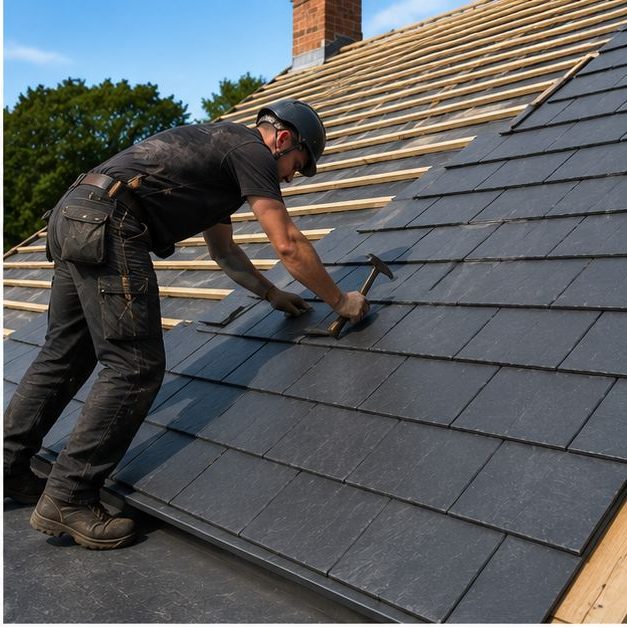
Dry ridge and dry hip systems address this by mechanically fixing tiles using purpose-made clips and fittings rather than relying on mortar to hold everything together over time. This approach copes far better with wind and temperature movement over the years, since there is no brittle mortar joint to crack and no ongoing cycle of small failures building up along the roofline. For a more exposed home in Nailsea, this difference can genuinely be the deciding factor between a ridge line that stays secure for decades and one that needs repeated, piecemeal attention every few years. Around the edges of Nailsea in particular, where roofs face longer, less interrupted runs of wind, this choice becomes even more worthwhile.
The choice is not purely about performance, though performance is naturally the main concern. Dry systems need to be installed correctly to look right and to ventilate the roof space properly, so this is not simply a case of swapping one product for another without adjusting the wider specification to match. Getting the detailing right at hips and ridges takes more care and experience than it might appear from ground level, and a poorly fitted dry system can cause its own problems if rushed.
There is a visual benefit as well, which some homeowners only appreciate once the work is finished. A dry ridge or hip system tends to hold its line neatly for far longer than a mortar-bedded equivalent, which can start to look uneven or patchy as sections crack and are patched individually over the years. Keeping a crisp, consistent roofline is a small thing on its own, but it adds up to a roof that continues to look well cared for long after installation, rather than one that gradually shows its age along the highest points first.
Brunel Roofing Bristol installs ridge and hip systems appropriate to how exposed each roof actually is, rather than defaulting to whichever method happens to be quickest to fit or cheapest to source, and explains the reasoning behind the choice as part of the quote.
If your existing roof has lost ridge or hip tiles in the past, or you have noticed crumbling mortar along the roofline during a walk around the garden, this is a good example of the kind of detail that a full re-roof can put right permanently, and it is worth raising when you contact Brunel Roofing Bristol for a quote.
Get a Free Quote for New Roof Installations in Nailsea
Every roof is different — the fastest way to get an accurate answer is a quick chat with our team.