
A roof valley is formed wherever two sloping roof planes meet at an angle, channelling rainwater down towards the guttering below. On a simple rectangular roof there may be no valley at all, but that is rarely the case in Hotwells, where the terrain rises steeply from the water's edge and buildings have often been extended, joined together or altered over the decades. The result is a housing stock with a genuinely varied mix of roof shapes, and valleys are one of the places where that complexity shows up most clearly.
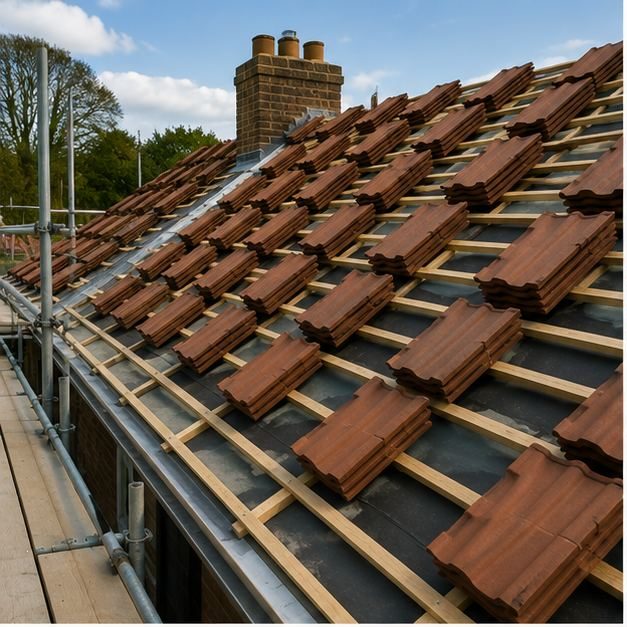
Because a valley collects water from two separate roof slopes rather than just one, it carries far more rainfall than an ordinary section of tiled or slated roof. This makes it one of the hardest-working parts of the entire structure, and also one of the most vulnerable if it is not built or maintained properly. On the steep terraced streets around Hotwells, where rooflines often step up the hillside and properties sit close together, a poorly performing valley can quickly send water into a loft space, a party wall, or even a neighbouring property. The materials and construction of a valley matter just as much as the roof covering around it. A valley that is too narrow, laid at the wrong angle, or lined with a material that has reached the end of its working life will struggle in heavy rain, regardless of how sound the surrounding tiles or slates appear. This is particularly relevant on the older, colourful terraces that give Hotwells its character, where original valley work may now be many decades old and quietly failing beneath tiles that still look presentable from the ground.
Because valleys sit at a junction of two roof slopes, they are also more exposed to structural movement, thermal expansion and general wear than a flat run of roofing. Over time this can loosen fixings, crack old lead, or allow debris to collect in ways that gradually undermine the waterproofing. Regular inspection of valleys is worthwhile precisely because problems here tend to be less visible than a slipped tile, yet the consequences of neglecting them can be more serious.
There is also a practical reason valleys deserve particular attention on a hillside site such as this. Many Hotwells properties sit on restricted plots with limited or awkward access, meaning that a roof cannot always be reached and inspected as easily or as often as a homeowner might like. When access to a roof is difficult, problems that begin at a valley junction can go unnoticed for longer than they would on a property with straightforward access all round, which makes it even more important that the valley was built correctly in the first place rather than relying on frequent checks to catch faults early.
If you are unsure how the valleys on your Hotwells roof are performing, or you suspect a leak may be originating from one, Brunel Roofing Bristol can carry out a proper inspection and explain what is involved in putting it right, whether that means a targeted repair or attention as part of a wider re-roof.
Get a Free Quote for New Roof Installations in Hotwells
Every roof is different — the fastest way to get an accurate answer is a quick chat with our team.