
Chimney brickwork takes more punishment than almost any other part of a house, standing exposed above the roofline and facing wind, driving rain and frost from every direction. Over enough years, that exposure shows up as cracking, spalling or loose masonry, three related but distinct problems that each call for a slightly different repair.
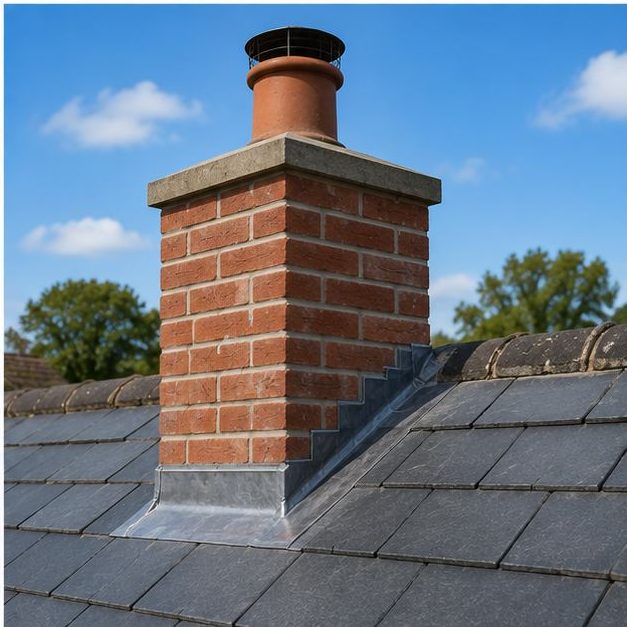
Cracks in the brick itself, as opposed to the mortar between bricks, usually point to either structural movement or long-term water penetration that has expanded and contracted within the brick through repeated freeze-thaw cycles. A single hairline crack in one brick isn't cause for alarm, but cracks running across multiple bricks, or through several courses, suggest something more significant is going on and warrant a proper look.
Spalling is different again: it's what happens when moisture gets into a brick's surface, freezes, and forces the face of the brick to crack and flake away, leaving a rough, pitted texture rather than a flat face. It's a common issue on older, more porous bricks, and it tends to be worse on stacks that catch the prevailing weather, which on many properties in Ashley Down means the side facing the wind and rain most directly.
Loose masonry, where individual bricks have worked free of their mortar bed and can be shifted by hand, is the most urgent of the three, since it indicates the stack's structural integrity is compromised in that area. This is different from cosmetic mortar wear and usually means water has been getting behind the brick face for some time, eroding the bond from within.
It's also worth being cautious of render or a thick coating being suggested as a quick fix for damaged brickwork. While it can improve appearance in the short term, rendering over spalling or cracked brick doesn't resolve the underlying moisture problem, and can trap dampness behind the surface, making the eventual proper repair more involved than if the brickwork had been dealt with directly in the first place. Which face of a chimney shows the worst damage often says something useful about how it's weathering. The side facing the prevailing wind and rain typically deteriorates faster than a sheltered face, which is why it's common to see a stack with noticeably worse spalling or pointing loss on one side than the others. Recognising this pattern helps when planning ahead, since the exposed face is usually the one worth prioritising for a check-up between full inspections. A close visual check every year or two, particularly after harsh winter weather, is a reasonable habit for catching these issues while they're still small and manageable rather than letting them develop unnoticed over several seasons.
The right fix depends on which of these is present, and often more than one shows up together: repointing addresses failed mortar, individual brick replacement handles isolated spalling or cracking, and rebuilding a section deals with widespread or structural loose masonry. If your chimney's brickwork is showing any of these signs, a free inspection will identify exactly what's needed. We work on stacks across Ashley Down and back every repair with a 15-year guarantee.
Get a Free Quote for Chimney Repairs in Ashley Down
Every chimney is different — the fastest way to get an accurate answer is a quick chat with our team.