
Cracked or loose brick on a chimney stack rarely happens overnight, and by the time it's noticeable from ground level in Downend, the underlying cause has usually been at work for years. Understanding why brickwork deteriorates, and what the right fix actually looks like, helps homeowners avoid either ignoring a genuine problem or paying for more extensive work than the situation actually calls for at this stage. Recognising the difference between a purely cosmetic crack and one that indicates genuine deterioration is something a specialist inspection can clarify fairly quickly.
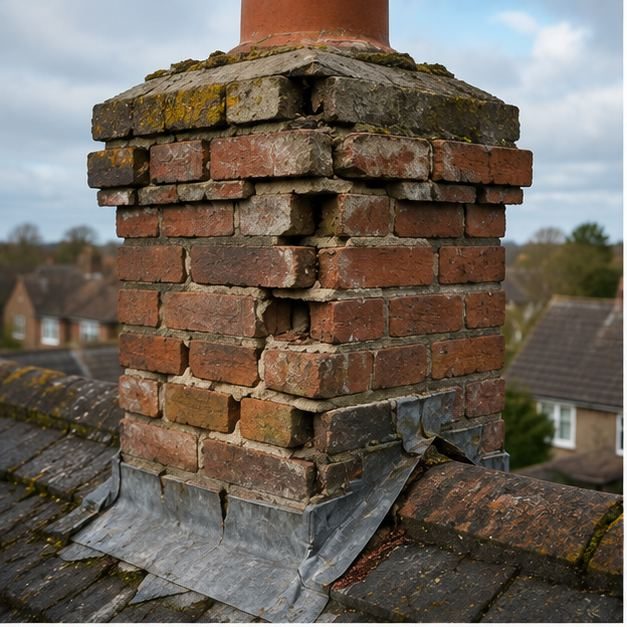
The most common cause is water penetration through failing mortar joints. Once pointing has eroded enough to let water into the brick itself, freeze-thaw cycles over successive winters cause the brick face to crack and eventually crumble, a process known as spalling. Individual bricks affected this way tend to weaken the ones around them too, since the whole point of sound mortar and brick working together is to keep water moving off the surface rather than into it in the first place. It's also worth checking nearby bricks for hairline cracks that haven't yet progressed to full spalling, since catching these early can sometimes mean simple repointing is enough to halt further deterioration.
Loose bricks are a step further along the same process, where mortar has deteriorated so much that a brick is no longer held firmly in place. On a chimney stack, this isn't purely cosmetic; loose brick near the top of a stack can eventually work its way free entirely, which is a genuine safety concern given the height involved on most Downend properties and the pavements or gardens often below.
Repairing isolated cracked or loose bricks usually means removing the affected brick and replacing it with a matching one, along with repointing the surrounding area to prevent the same issue recurring nearby. Where damage is more widespread across a section of the stack, a partial rebuild of that area is often more practical and longer-lasting than trying to replace bricks one at a time across a badly deteriorated face. Left entirely unaddressed, what starts as a single damaged brick can, over several more winters, spread to affect a much larger section of the stack.
Addressing the mortar at the same time as the brick itself is essential, since new brick set into failing mortar will simply be exposed to the same water penetration that caused the original damage. Getting the mortar mix right for the property's age also matters, particularly on older Downend homes where a harder cement mix can do more harm than good against softer original brick beneath it. Weather conditions during the repair itself also matter, since brick and mortar need appropriate temperatures to bond and cure properly rather than being rushed through in poor conditions.
If you've spotted cracked or loose brick on a chimney in Downend, it's worth having it assessed before winter weather makes the problem worse. Brunel Roofing Bristol offers free inspections and can advise honestly on the right scope of repair.
Get a Free Quote for Chimney Repairs in Downend
Every chimney is different — the fastest way to get an accurate answer is a quick chat with our team.