
Lead flashing is one of those components that works perfectly well for years and then, once it starts to fail, causes disproportionate amounts of trouble for something so small in the context of a whole roof. On chimneys across Downend, flashing problems are among the most frequent causes of leaks reported by homeowners, and the underlying issues tend to fall into a fairly predictable handful of categories once you know what to look for. Because the failure modes are fairly predictable, an experienced eye can often narrow down the likely cause fairly quickly once up at roof level for a proper look.
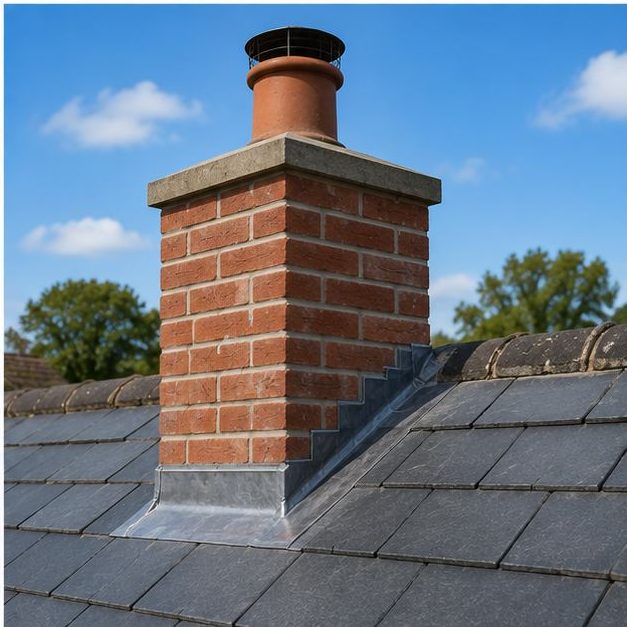
Age-related cracking is the most common cause. Lead expands and contracts with temperature changes, and after enough decades of this cycle, particularly on older properties in the area, it can develop hairline cracks that widen over time, eventually letting water through at exactly the junction it's supposed to protect and rarely giving much warning before it does.
Poorly installed or undersized flashing from a previous repair is another recurring issue, sometimes found on properties where earlier work wasn't carried out to a proper standard. Flashing that was never dressed correctly into the brickwork joints, or that's simply too narrow to cope with heavy rain running down the stack, tends to fail well before its time regardless of the lead's actual condition otherwise. It's worth having any recent roof work checked specifically for this kind of accidental damage, since it's easy for flashing to be disturbed without anyone noticing at the time.
Physical damage also plays a role, whether from storms lifting a section of flashing, or from general wear where the lead has been walked on during other roof work without being properly protected. Once flashing is lifted or dislodged even slightly, water can get behind it, and the resulting leak often has little relation to how bad the flashing looks from a distance on a casual inspection. None of these causes are particularly unusual, which is exactly why flashing failure remains one of the most common chimney-related call-outs across the area.
Because leaks from failed flashing don't always appear directly below the fault, tracing the actual source sometimes requires inspecting the flashing itself rather than working backwards from a ceiling stain, since water can travel along timbers before it becomes visible indoors, often well away from where the actual crack sits. Checking flashing after any significant storm is a sensible habit generally, since even a small amount of visible movement can be an early sign that something has shifted. Acting promptly once a problem is spotted generally keeps the repair straightforward, rather than allowing a small fault to develop into a more involved job.
If you're dealing with a leak, or have noticed lifted or cracked flashing around a chimney in Downend, Brunel Roofing Bristol can inspect it properly and carry out a repair or replacement as needed, with a free quote and 15-year guarantee on completed work.
Get a Free Quote for Chimney Repairs in Downend
Every chimney is different — the fastest way to get an accurate answer is a quick chat with our team.