
Brick, for all its durability, isn't immune to the effects of decades spent exposed at roof height, and chimney stacks — sitting above the rest of the house and taking the full force of Bristol's wind and rain — tend to show wear before almost anything else on a property. Across Greenbank's older terraced housing, spalling brick is one of the most common issues we're asked to look at, often on stacks that have otherwise gone largely unmaintained for many years without any obvious sign of trouble from street level.
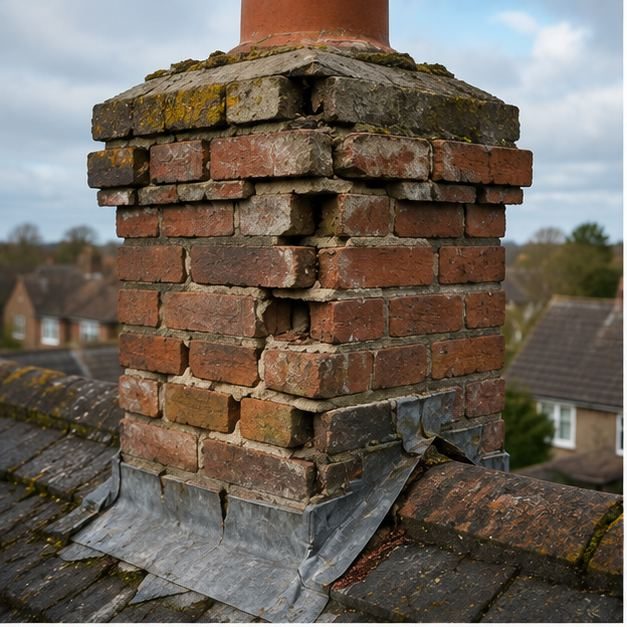
Spalling happens when water gets into the brick itself, usually through worn mortar joints or a porous or previously damaged brick face, and then freezes during colder months. As ice expands, it forces the outer face of the brick to crack and flake away, sometimes leaving a soft, crumbly texture behind and exposing the brick's inner core to further weathering. Once a brick has begun spalling, the problem tends to accelerate, since the newly exposed surface is even more absorbent than before, drawing in more moisture with each spell of rain and speeding up the whole process considerably.
Left unrepaired, spalling bricks weaken the overall structure of the stack over time and can allow water further into the chimney, contributing to damp problems inside the home well below roof level. It's rarely just a cosmetic issue, even though it often starts out looking like one, and a stack with several spalling bricks close together can begin to lose structural integrity if the damage isn't addressed within a reasonable timeframe. In some cases, a brick that looks sound on the surface can still be failing internally, which is why a roofer will often gently tap suspect bricks to listen for the duller sound that indicates hidden decay beneath an otherwise intact face.
Repairs generally involve carefully cutting out the damaged bricks and replacing them with matching units, bedded in with an appropriate mortar — again, lime mortar is usually the right choice for the older, softer brick found on many Greenbank properties, since cement-based mortar can be harder than the brick itself and force moisture to escape through the brick face rather than the joint, worsening the very problem it's meant to fix. Where damage is more widespread across a section of the stack, repair can extend into a partial rebuild of that area rather than individual brick-by-brick replacement, particularly where several adjacent bricks have failed together.
Matching brick colour and texture reasonably closely matters for how the finished repair looks from the street, and it's something worth discussing before work starts rather than after, particularly on a visible terraced frontage where a mismatched patch can stand out for years to come and affect the overall appearance of the property.
If you've noticed crumbling or flaking brick on your chimney, it's best not to leave it to worsen over another winter. Brunel Roofing Bristol can inspect the stack, explain what's causing the damage, and give a free, no-obligation quote for putting it right.
Get a Free Quote for Chimney Repairs in Greenbank
Every chimney is different — the fastest way to get an accurate answer is a quick chat with our team.