
Mortar joints do most of the quiet, unglamorous work of keeping a chimney stack weatherproof, and on the Victorian terraces that make up much of Greenbank's housing stock, those joints have often been exposed to well over a century of Bristol weather. Unlike a slipped tile or a cracked pot, failing mortar rarely announces itself with a dramatic leak straight away — it erodes gradually, course by course, until the stack is far more vulnerable than it looks from ground level. By the time a homeowner notices anything is wrong, the mortar may already have been letting water in for a season or two, quietly undermining the brickwork above the roofline.
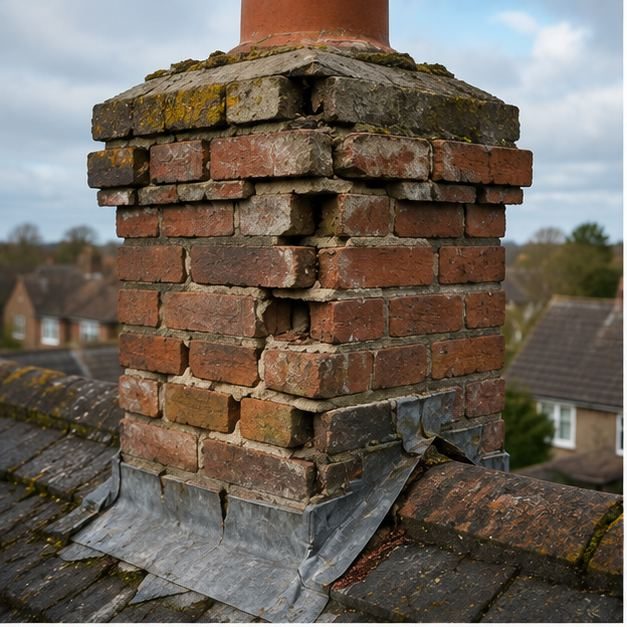
The clearest early sign is mortar that has gone soft or sandy, crumbling away between your fingers if you can safely reach a low section, or visibly missing in patches higher up the stack. Recessed joints, where the mortar sits noticeably behind the face of the brick rather than flush with it, are another giveaway, as is moss or small plants taking hold in the gaps — a sign that enough moisture and grit is collecting there for vegetation to root. Discolouration on the brick face just below a joint, where water has been running rather than shedding cleanly, is another useful clue. From the ground, a pair of binoculars or a look from an upstairs window is often enough to spot these issues before they need urgent attention, though a proper close-up inspection from height is always more reliable than guessing from a distance.
Left unaddressed, failing mortar lets water track behind the brickwork, where it sits and, particularly during a Bristol winter, expands as it freezes. That freeze-thaw cycle is one of the main reasons older chimneys develop spalling bricks, cracked faces, or loosened courses that go well beyond a simple repointing job if the damage runs deep enough. What starts as a cosmetic issue on a handful of joints can, within a few winters, turn into a much larger repair involving brick replacement or partial rebuilding, simply because the underlying cause was left to worsen unchecked year after year.
Repointing itself involves carefully raking out the failed mortar to an adequate depth — not just skimming over the surface, which tends to fail again within a year or two — before repacking the joints with a fresh mix. On Greenbank's older brick chimneys, this is one area where getting the specification right really matters: many of these stacks were originally built with a softer, more flexible lime mortar, and repointing with a hard modern cement mix can trap moisture in the brick rather than letting it breathe, often causing more damage than it solves over time. Matching the mortar mix and finish to what was originally used is a small detail that has a real effect on how long the repair actually lasts.
Because chimneys sit at the highest, most exposed point of the roof, proper access is usually needed to inspect and repair them safely, particularly on the taller terraced roofs typical of this part of Bristol. A scaffold tower gives a roofer the chance to check the whole stack properly rather than guessing from a ladder, and it also means any other issues — a loose pot, cracked flaunching, a hairline crack in the brickwork — can be picked up and dealt with in the same visit rather than requiring a return trip weeks later.
If you've noticed any of these signs on your Greenbank chimney, it's worth getting it looked at before the next spell of wet weather rather than after. Brunel Roofing Bristol offers free, no-obligation inspections and can advise honestly on whether repointing will do the job or whether more extensive work is needed, with all completed repairs backed by a 15-year guarantee for genuine peace of mind.
Get a Free Quote for Chimney Repairs in Greenbank
Every chimney is different — the fastest way to get an accurate answer is a quick chat with our team.